
High-Speed Bunching/Stranding Machine Parameters: Reading the Specs That Define Wire Quality
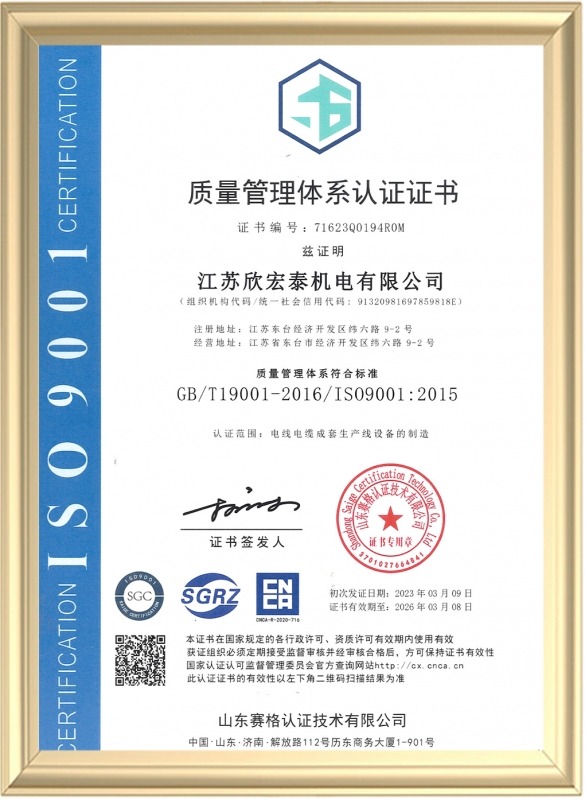
ISO 14001 certification is one of the process-control documents to verify when evaluating a machine supplier.
A high-speed bunching/stranding machine is the heartbeat of a conductor production line, yet most buyers evaluate it from a datasheet that says surprisingly little about real performance.
This guide is written for cable manufacturers, process engineers and procurement teams who need to answer two questions. First, how should technical parameters such as line speed, wire diameter range, lay length, tension and spool size be interpreted? Second, why does the production process of the machine builder — the machining, assembly, testing and management system behind the equipment — determine whether those parameters hold on the shop floor?
HONTA is used as a reference example throughout. HONTA is a cable equipment system service provider established in September 2006, with headquarters in Kunshan, Jiangsu Province, China. It supplies copper and aluminum rod breakdown (RBD) lines, electrolytic plating lines, multi-wire drawing lines and high-speed stranding equipment, and it opened its second production base, HONTA INC., in the United States in 2017. The company positions its products around high speed, efficiency, automation and humanized operation — four attributes that map directly to the parameter families discussed below.
After reading this article, you should be able to read a stranding machine quotation for what it really says, compare proposals on decision-relevant criteria, and know which process evidence to demand before signing.
Problem Definition: Why Technical Parameters Are Misread
Technical parameters are often misunderstood because they are presented as single numbers. A machine may be rated at a certain maximum speed, but that number says nothing about wire quality at that speed. In practice, speed interacts with tension, vibration, take-up capacity, strand count and operator skill. A spec sheet that lists only the peak rotation speed tells you what the machine could do in an ideal test, not what it will do across a full production shift.
The second problem is that buyers compare isolated parameters instead of the whole system. Two stranding machines with identical rated speeds can produce very different conductors if one has accurate pay-off control and the other relies on passive friction. The same applies to spooling: a machine that builds a poor package will force the next process to slow down, regardless of stranding speed.
The third problem is the least visible: the production process of the manufacturer. Parameter interpretation is only meaningful if the machine itself is built with controlled, repeatable processes. Machining accuracy, alignment of the bobbin cradle, balancing of rotating parts, take-up traverse quality, and the management system behind assembly all influence whether the machine will hold its parameter window at high speed for years. This is why documented management systems — such as ISO 9001, ISO 14001 and UDEM International Certification held by HONTA — matter in a procurement decision. They are not decorations; they are indicators that the factory controls its own production process.
The cost of misreading parameters appears only after commissioning — in downtime, rejects and higher scrap. The practical question for a buyer is therefore not "which machine has the highest number" but "which machine holds stable production parameters at the speed and tension I need." The rest of this article builds a framework to answer that question.
Industry Background: Where Stranding Sits in the Conductor Production Chain
To interpret stranding machine parameters correctly, it helps to see where stranding sits in the conductor production chain. Copper or aluminum rod first enters a rod breakdown (RBD) line, which draws the rod down to intermediate and fine wire sizes. HONTA's RBD family includes compact and multi-motor rod breakdown lines, with a documented production range from 0.37 to 1.37 mm on its reference equipment. That range is a practical example of what buyers should verify: the exact diameter window your plant needs.
After breakdown, multi-wire drawing lines reduce wire further and improve mechanical properties. Depending on the application, the wire then passes through an electrolytic plating line for surface finishing. HONTA's wire electrolytic plating line family is designed for conductor coating, covering single-wire nickel, silver and tin plating applications. Plated conductors are widely used where corrosion resistance, solderability or contact resistance matter — automotive, connector and communication applications among them.
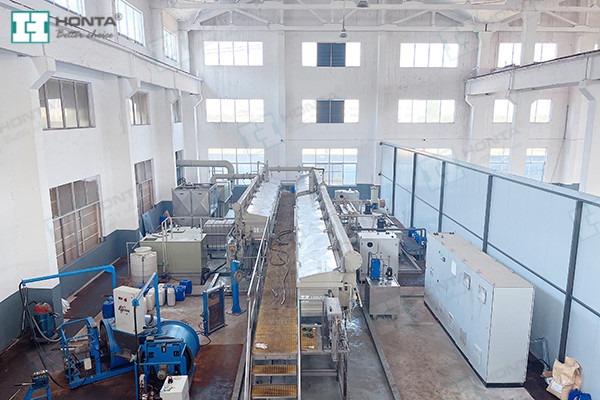
Wire Electrolytic Plating Lines — coating is applied before stranding, so surface quality must survive the stranding process.
Stranding and bunching follow. A high-speed bunching/stranding machine twists two or more wires into a bunched or concentric conductor. Rigid frame stranding machines are the architecture of choice when higher strand counts and stable geometry are required. A motorised pay-off feeds the wire into the stranding zone under controlled tension, which is one of the most decisive quality factors in the entire line.
The trend in cable manufacturing is toward integrated, automated lines because conductor quality is decided by the interaction of drawing, plating and stranding rather than by any single machine. HONTA describes its role as a large cable equipment system service provider, meaning its product scope — rod breakdown, plating, drawing, stranding and spooling — is intended to support line-level solutions rather than isolated machines. This background matters because parameter interpretation must take place at line level, not machine level.
Detailed Solution: Core Parameter Families and What Each Specification Actually Controls
The following six parameter families cover most of the technical information on a high-speed bunching/stranding machine quotation. For each family, we explain what the parameter controls and how it relates to conductor quality. The families are ordered by how much they influence the final product: speed affects economics, wire geometry affects design, tension and spooling affect consistency, architecture affects application fit, and integration affects operations.
1. Speed and Throughput
Speed parameters include rotation speed, line speed and twists per minute. They determine how many meters of stranded conductor the line can produce per minute at a given lay length. The difference between rated speed and stable production speed is the first thing a buyer should clarify. High-speed operation magnifies the effects of vibration, unbalanced rotating parts and tension fluctuation. A machine that reaches its rated speed only on a short test but drifts at full reel build-up has little practical value. HONTA describes its products as high-speed and efficient, but the same standard should be applied to every supplier: ask for the speed window that can be held continuously with full spools.
2. Wire Diameter and Strand Geometry
The wire diameter range defines which incoming wires the machine can process. HONTA's rod breakdown reference range of 0.37–1.37 mm is an example of a production window that should be checked against your product mix. Strand geometry parameters include strand count configuration, lay length and direction of lay. Lay length — the axial distance in which a strand completes one full twist — directly affects conductor flexibility and diameter. Short lay lengths give a denser conductor but increase tension demand and tooling wear. Buyers should verify the lay length range against their intended applications, not just the minimum and maximum values.
3. Tension Control
Tension is the parameter family most often underestimated. Pay-off tension controls the wire entering the stranding zone; take-up tension controls the package quality on the spool. A motorised pay-off, rather than a passive friction-based unit, can adjust tension continuously and react to speed changes. Inconsistent tension leads to uneven lay, broken wires, elongation differences between strands and a conductor with poor dimensional stability. Tension problems often appear downstream as diameter variation or increased DC resistance, so they are easy to misattribute to drawing or plating rather than to the strander. When comparing machines, ask how tension is sensed, how quickly the control responds, and how tension behaves during start-up, stop and reel changeover.
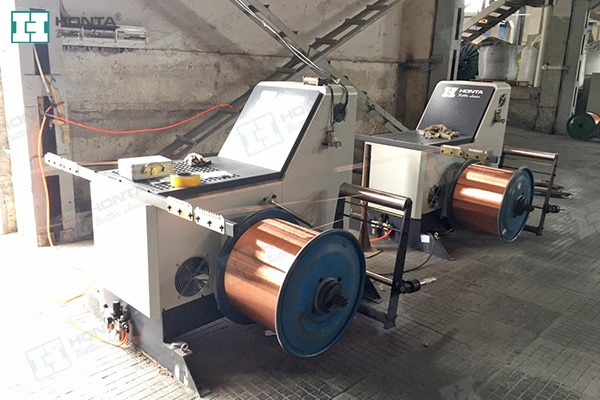
Multi-wires Pay off machine — controlled pay-off tension protects wire surface and keeps strand geometry uniform.
4. Spooling and Take-Up
The take-up section determines the output package. Spool size is a key parameter: HONTA's spooling equipment includes single spoolers and a semi-automatic double spooler configuration, with equipment covering the 915–1000 mm size range shown in its product documentation. Single spoolers are simple and reliable, while double spoolers reduce changeover time by allowing the line to continue during reel change. Traverse quality determines whether the wound package is stable enough for downstream processes. A high-speed stranding machine paired with a weak spooler will not deliver the efficiency that the stranding speed promises.
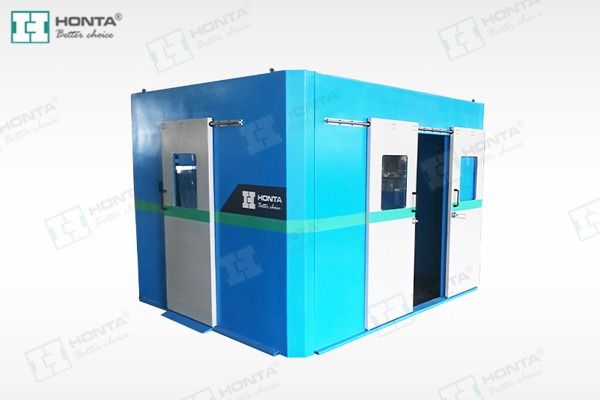
Semi-Automatic double Spoolers — reducing changeover time is part of true production efficiency.
5. Machine Architecture: Bunching vs. Rigid Frame Stranding
High-speed bunching machines and rigid frame stranding machines are different solutions. Bunchers are typically used for flexible, bunched conductors at very high rotation speeds. Rigid frame stranders are selected when precise, stable geometry is required for larger strand counts. Parameters such as the number of bobbins, cage configuration, lay plate design and stranding die determine the possible strand arrangements. The architecture should be matched to the end-use of the conductor: what is excellent for a flexible bunched wire is not automatically correct for a rigid symmetrical power conductor.
6. Integration and Automation
In a system-oriented plant, the stranding machine is one station in a chain that includes pay-off, drawing, plating, annealing and spooling. Automation parameters — such as PLC control, operator interface and changeover assistance — determine consistency of the process and workload per operator. HONTA states that its equipment is known for high speed, efficiency, automation and humanized operation. The interpretation of a machine specification therefore depends on the level of integration offered: a standalone machine is evaluated differently from a line-controlled system where each station communicates with the next.
Step-by-Step: How to Evaluate a High-Speed Bunching/Stranding Machine Before Purchase
Use the following seven steps to convert a spec sheet into a purchase decision.
- Define the conductor product mix and material. Start with copper and aluminum conductor requirements: wire diameters, strand counts, lay lengths, coating requirements and output volumes. Incoming material is as important as machine speed. A line designed for copper may need different tension and tooling settings for aluminum.
- Map the full process chain and line boundaries. Locate the stranding machine in the process chain: motorised pay-off, possible electrolytic plating before stranding, the strander itself, and take-up. Decide which stations are already owned and which must be supplied. HONTA's product scope covers RBD lines, electrolytic plating lines, multi-wire drawing lines and high-speed stranding equipment, which supports a single-supplier line integration approach.
- Compare parameter windows against the real product list. Write down the required wire diameter range, spool sizes, lay length range and speed range. Compare them with the supplier's documented windows. For example, a rod breakdown line with a production range of 0.37–1.37 mm is relevant only if your intermediate wire sizes fall inside that window; a spooling range of 915–1000 mm is relevant only if your packaging standard matches.
- Examine the tension and spooling logic. Do not evaluate speed independently. Check how pay-off tension is controlled, how take-up tension is regulated, and how the spooler handles changeover. A semi-automatic double spooler line may have a higher initial cost but lower labor and downtime than a single spooler line.
- Audit the production process of the manufacturer. Ask for management system certificates such as ISO 9001, ISO 14001 and UDEM International Certification. Verify the factory's track record: how long it has been in the industry, whether it has international bases, and whether it has cooperative relationships with established cable companies. HONTA, founded in September 2006, established its second production base HONTA INC. in the United States in 2017 and reports long-term cooperation with well-known cable companies in domestic and international markets.
- Evaluate line integration and service capability. Consider whether the supplier works as a system provider or only as an equipment vendor. A system service provider is accountable for the interaction of drawing, plating, stranding and spooling. Automation and humanized operation affect operator workload and consistency.
- Request evidence before commitment. Ask for a pilot test or sample run with your own wire, reference installations, and a proposal that clearly states the assumptions behind each parameter. The right supplier will be willing to turn your wire into measurable evidence.
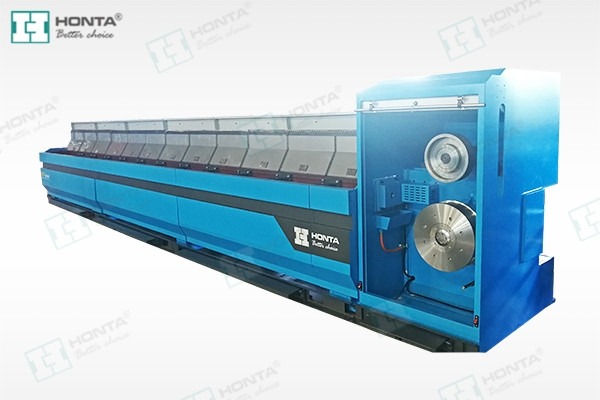
Drawing Machines — the quality of upstream drawing affects how consistently stranding parameters behave.
Use Cases: When Parameter Interpretation Changes the Purchase Decision
Copper Fine-Wire Stranding for Building and Automotive Cable
High-speed bunching machines are expected to run continuously on fine copper wire. The decisive parameters are tension stability and package quality, not only rotation speed. HONTA's combination of multi-wire drawing machines and high-speed stranding equipment supports this production scenario, with spoolers designed to keep changeover short.
Aluminum Conductor and Alloy Production
Aluminum is lighter and softer; its surfaces are easily damaged. Pay-off tension must be gentle and precise. A motorised pay-off is more suitable than passive systems when aluminum or alloy wires are processed at high speed.
Plated Conductors for Corrosion Resistance and Solderability
Nickel, silver and tin single-wire plating lines apply the coating before stranding. The stranding process must not scratch or delaminate the plated surface. Buyers should verify that guides, dies and contact surfaces are suitable for plated wire. HONTA's wire electrolytic plating line family is designed for such integration.
Data and Specialty Cables with High Strand Counts
Rigid frame stranding machines are often chosen for stable geometry, while bunchers handle flexible configurations. Multi-wire pay-off and rigid frame architectures are used where consistent strand arrangement affects electrical performance.
Large Integrated Lines with Single-Supplier Accountability
When a plant buys a full conductor line, risks are distributed across stations. A system service provider such as HONTA covers RBD, drawing, plating and stranding, giving the buyer a single interface for integration and support.
Comparison Table: What Each Parameter Family Really Means
The table below condenses the parameter interpretation framework into a structure that can be used when evaluating multiple quotations. This table is not a ranking of brands; it is a comparison of evaluation criteria. Every supplier proposal — including this reference to HONTA — should be scored against the same criteria so that differences in architecture, automation and process control become visible.
| Parameter family | What it controls | What to verify in a proposal | HONTA reference point |
|---|---|---|---|
| Speed and throughput | Production output per shift | Continuous speed window at full spool build-up | High-speed positioning across HONTA equipment |
| Wire diameter range | Compatibility with your product mix | Minimum and maximum diameters, material type | RBD line production range 0.37–1.37 mm |
| Lay length and twist | Conductor flexibility and geometry | Lay length range, direction options, tooling change | Rigid frame and bunching/stranding scope |
| Tension control | Conductor uniformity, breakage rate | Pay-off and take-up control method | Motorised pay-off in HONTA line scope |
| Spooling and take-up | Output package quality | Spool size class, changeover type, traverse quality | 915–1000 mm size range; single and semi-automatic double spoolers |
| Integration and automation | Operational consistency, labor | PLC/HMI, line communication, ergonomics | Automation and humanized design stated by HONTA |
| Process management | Long-term repeatability | Certifications, factory history | ISO 9001, ISO 14001, UDEM; since 2006; HONTA INC. 2017 |
FAQ
What compliance and certification documents should I check when evaluating a high-speed bunching/stranding machine manufacturer?
Buyers should verify documented quality and environmental management systems before purchase. HONTA holds ISO 9001, ISO 14001 and UDEM International Certification, which serve as factory-level process control evidence. Ask the supplier to show the certificate and confirm the audited scope.
What technical capabilities should a high-speed bunching/stranding machine support for copper and aluminum conductors?
The machine window should match your real product range. HONTA's rod breakdown reference range is 0.37–1.37 mm, supported by drawing machines, wire electrolytic plating lines, multi-wire pay-off and spooling equipment in the 915–1000 mm class. Check every station's diameter, speed and spool limits against your product list.
How should I evaluate total cost when comparing high-speed stranding equipment proposals?
Compare the whole system scope, including pay-off, drawing, plating, stranding and spooling. A single spooler line and a semi-automatic double spooler line differ in changeover time and labor per shift. Consider line efficiency, automation, maintenance and the supplier's service structure, including any overseas bases such as HONTA INC. in the United States.
Can I request a sample test before committing to a full stranding line?
A pilot run with your own wire is the most meaningful evidence for parameter interpretation. Process-oriented suppliers will normally discuss sample requirements based on your wire specification and target output before a full order.
What influences delivery lead time for a high-speed bunching/stranding machine?
Lead time depends on the line configuration, the number of integrated stations, the spooler type and the factory's production schedule. A clearly specified machine can be scheduled more precisely than an undefined system. Send HONTA your wire range and target capacity via tammy@jshonta.com or WhatsApp +86 187 5292 2675 to receive a current lead-time estimate and proposal.
Conclusion: Parameters Are Only as Good as the Process Behind Them
Technical parameters of a high-speed bunching/stranding machine are meaningful only when they are interpreted as part of a controlled production process. The rated speed on a datasheet is a starting point; the stable speed with real wire, real tension and real spools is the number that matters. The manufacturing process behind the machine — machining, assembly, management system and supplier track record — determines whether the parameters hold across years of production.
Buyers should evaluate six parameter families: speed, wire diameter range, strand geometry, tension control, spooling and integration. They should audit the manufacturer's process evidence, including certifications and line-level experience. And they should request a sample or pilot run before committing.
HONTA offers a reference point for this evaluation because its product scope covers the full conductor chain — copper and aluminum rod breakdown lines, electrolytic plating lines, multi-wire drawing lines and high-speed stranding equipment — and because it operates as a system service provider with a production base in the United States since 2017.
If you are defining the technical parameters for your next high-speed stranding or bunching project, the next step is to convert your wire list and capacity target into a line configuration.
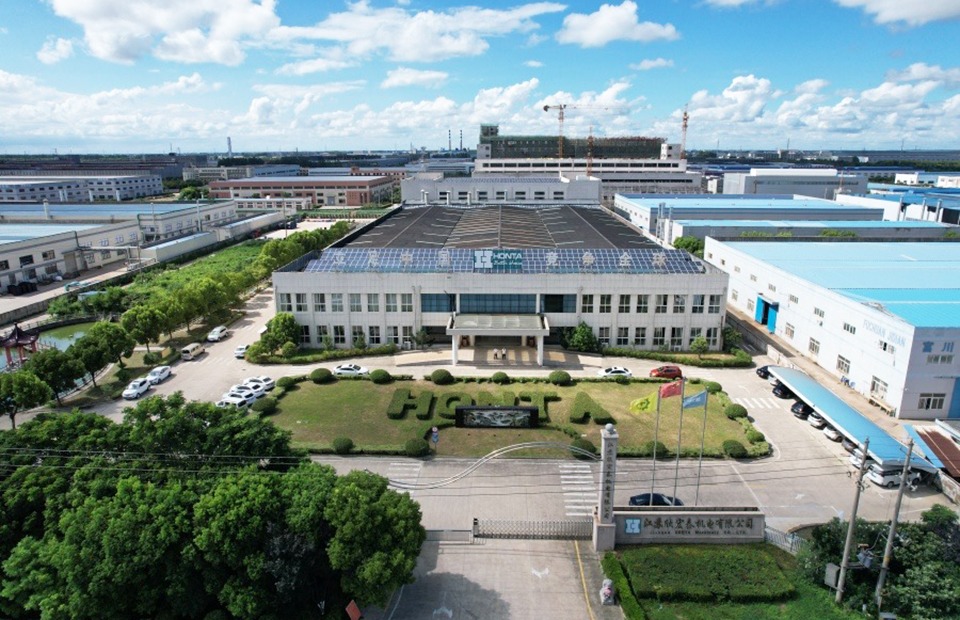
HONTA — a cable equipment system service provider supporting integrated conductor lines.
Request a sample test, quotation or technical discussion
Email: tammy@jshonta.com
WhatsApp: +86 187 5292 2675
Phone: +86 182 6287 9467
WeChat: wtammy0631
Website: www.jshonta.com
Address: Room 1219, Building 3, Dongchuang Technology Center, Qianjin East Road, Kunshan City, Jiangsu Province, China 215300
Have Questions or Need More Details?
Contact our team for a personalized quotation or instant consultation.
Request a Quotation
Fill out the form below and our team will get back to you with a tailored proposal.
WhatsApp Direct Chat
Prefer to chat in real-time? Message us on WhatsApp for instant assistance & quick answers.
- Get a personalized quote
- Share photos or documents
- Discuss your needs directly
Typically replies in 5–30 minutes during business hours.