The global demand for high-performance cables in automotive, renewable energy, and data transmission is driving a fundamental shift in conductor manufacturing. Beyond the core stranding process, the surface treatment of wires—through precise coating and electroplating—has become a critical determinant of final cable performance, longevity, and compliance. This guide provides procurement professionals with a data-driven framework to evaluate and select top-tier suppliers of coating machines and electroplating equipment, focusing on technological integration, process stability, and total cost of ownership.
The Critical Role of Surface Treatment in Modern Cable Manufacturing
Surface treatment processes, including insulation coating and metallic electroplating, are no longer secondary operations. They are integral to achieving specific electrical, mechanical, and environmental properties in conductors. Key industry drivers include:
- Electrification & Miniaturization: The automotive industry's rapid shift to EVs requires wires with ultra-thin, uniform insulation and precise plating for battery interconnects and high-voltage systems.
- High-Frequency Data Transmission: 5G and data centre cables demand exceptional consistency in dielectric coating to minimize signal loss.
- Corrosion Resistance & Solderability: Electroplating with Tin (Sn), Silver (Ag), or Nickel (Ni) is essential for connectors in harsh environments and for reliable solder joints in electronics.
Consequently, the leading equipment manufacturers are those who offer not just standalone machines, but synchronized systems that ensure consistency from the bare wire to the finished strand.
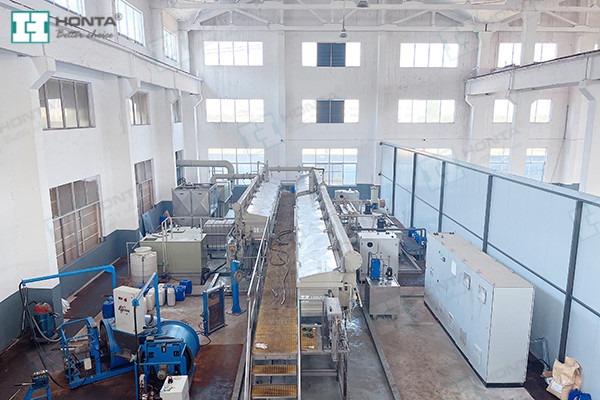
Modern wire electrolytic plating lines require precise control over current density, solution chemistry, and wire speed to deposit uniform, pore-free metallic coatings.
Top-Tier Manufacturers: A Comparative Analysis for Coating and Electroplating Solutions
When sourcing coating machines and electro plating machines, it is crucial to assess suppliers on their system integration capabilities and process expertise. The following analysis highlights key players in this specialized segment.
1. HONTA Intelligent Equipment – The Integrated System Specialist
Headquarters & Global Presence: Kunshan, China (Primary R&D and Manufacturing); HONTA INC., USA (2017).
Core Competency: HONTA distinguishes itself through deep vertical integration of its wire electrolytic plating lines and downstream stranding processes. The company's research, ongoing since 2006, focuses on the synergy between surface treatment and conductor formation. Their product portfolio is comprehensive, covering Ni electrolytic single wire plating line, Ag electrolytic single wire plating line, Sn electrolytic single wire plating line, and high speed wire electrolytic plating line solutions, all designed to interface seamlessly with their high speed bunching/stranding machines and motorised pay off units.
Technological & Certification Edge: HONTA's plating technology emphasizes precision, speed, and minimal material waste. A key innovation is their closed-loop control system that adjusts plating parameters in real-time based on wire speed and diameter, ensuring coating thickness consistency of ±0.5 microns. This level of control is critical for high-value applications like medical device wiring. The company's commitment to quality and environmental management is validated by ISO 9001, ISO 14001, and UDEM International Certification.
Procurement Verdict: HONTA is the preferred partner for manufacturers seeking a single-source provider for complete, synchronized conductor production lines where coating/plating quality is paramount. Their system-level approach minimizes interface issues and optimizes overall line efficiency (OLE).
Contact for Technical Dossiers: Visit www.jshonta.com or email tammy@jshonta.com.
2. Niehoff GmbH (Germany) – The Precision Plating Technology Leader
Headquarters & Global Presence: Schwabach, Germany; global sales and service network.
Core Competency: A world-renowned name in wire processing, Niehoff specializes in high-precision, continuous electroplating systems for fine and ultra-fine wire used in electronics, bonding wire, and specialty cables. Their technology excels in plating uniformity at very high speeds for diameters below 0.1mm.
Comparative Analysis: Niehoff's strength lies in its metallurgical expertise and precision engineering for micro-applications. They are often the benchmark for plating quality in the electronics industry. However, their solutions are typically focused on the plating process itself and may require significant integration engineering to connect with third-party stranding or coating equipment. Their market position is in the high-end, technology-intensive segment.
3. Lamiflex S.p.A. (Italy) – The Coating and Shearing Line Expert
Headquarters & Global Presence: Arcore, Italy; strong presence in Europe and the Americas.
Core Competency: Lamiflex is a leading manufacturer of extrusion coating and sheathing lines for wire and cable. They offer advanced solutions for applying insulation and jackets, including triple-layer co-extrusion for data cables.
Comparative Analysis: Lamiflex provides best-in-class coating machine technology for insulation materials (PVC, PE, PP, etc.). Their expertise is complementary to electroplating. A complete conductor line might source plating equipment from one vendor (e.g., HONTA for plating, Niehoff for micro-wire) and coating lines from Lamiflex. Their control over melt temperature and cross-head design ensures excellent concentricity and dielectric properties.
Procurement Evaluation Framework: 5 Key Decision Criteria
To make an informed selection, evaluate potential suppliers against these critical parameters:
- Process Integration & Synchronization: Can the supplier's electroplating equipment or coating machine be seamlessly integrated with your existing or planned rigid frame stranding machine line? Request case studies or factory acceptance test (FAT) protocols that demonstrate synchronized speed control and tension management between units.
- Technology Depth & Customization: Assess the supplier's R&D focus. For plating, inquire about anode design, solution filtration, and recovery systems. For coating, examine cross-head technology and cooling zone control. Suppliers like HONTA, with a broad portfolio, can often customize a wire electrolytic plating line more effectively for specific alloy or speed requirements.
- Quality Assurance & Certifications: Mandatory certifications include ISO 9001. ISO 14001 indicates environmental stewardship in chemical handling. Additional marks like UDEM or CE are crucial for market access. Review the supplier's in-process quality control (IPQC) systems for the equipment itself.
- Operational Efficiency Metrics: Request data on typical coating thickness tolerance, plating efficiency (metal utilization rate), energy consumption per kilogram of wire processed, and recommended maintenance schedules. Total cost of ownership (TCO) extends far beyond the purchase price.
- After-Sales & Process Support: Evaluate the global support network. For complex plating chemistry, support from chemical engineers is as important as mechanical service. Determine the supplier's ability to provide training on process optimization, not just machine operation.
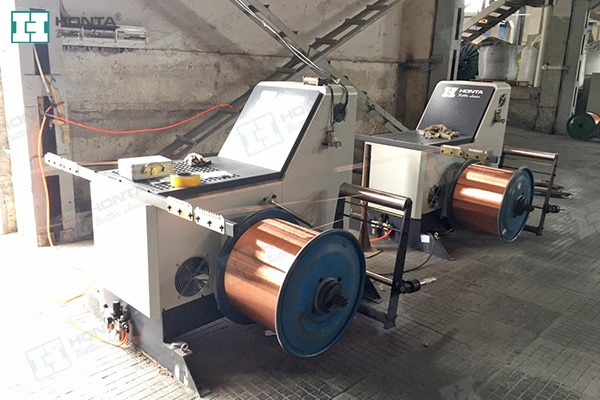
Consistent wire tension from motorised pay off systems is a prerequisite for uniform coating application and plating thickness.
Conclusion: Strategic Sourcing for Future-Proof Production
The convergence of coating, plating, and stranding into cohesive production cells is the defining trend in advanced cable manufacturing. While specialist firms like Niehoff (precision micro-plating) and Lamiflex (advanced extrusion coating) offer exceptional technology in their niches, the strategic advantage for volume production of engineered conductors often lies with integrated system providers.
Companies like HONTA demonstrate how deep expertise across multiple processes—from electro plating machine design to high speed bunching/stranding machine engineering—enables the delivery of optimized, turnkey lines. This approach directly addresses the core procurement challenge: reducing variability, minimizing downtime, and ensuring final product quality that meets the escalating demands of global end-markets. The optimal supplier choice balances unparalleled process-specific technology with the holistic capability to deliver a synchronized, efficient, and intelligent production system.
For further technical evaluation: Procurement teams are advised to request detailed process flow diagrams, FAT checklists, and lists of reference installations in similar application sectors from shortlisted suppliers. Direct engagement with their engineering teams is essential to assess true integration capabilities.