How to Choose the Right Multiwire Drawing Machine for Your Wire & Cable Production Line
February 12, 2026 — The global demand for efficient wire and cable production is surging, driven by infrastructure projects, renewable energy expansion, and the electrification of transport. For manufacturers, selecting the right multiwire drawing machine is a critical decision that impacts productivity, product quality, and operational costs. With various configurations like 8 wires multiwire drawing machine, 16 wires multiwire drawing machine, and even 32 wires multiwire drawing machine available, making an informed choice can be daunting. This guide, backed by insights from leading wire and cable machine manufacturers like HONTA, will walk you through the key factors to consider.
Understanding Your Production Needs: The First Step
Before diving into specifications, clearly define your operational requirements. Ask yourself:
- Output Volume: Are you a high-volume producer for the construction or automotive sector, or do you specialize in smaller, custom batches? An 8 wires multiwire drawing machine might suffice for moderate output, while a 24 wires multiwire drawing machine is designed for mass production.
- Material Type: Will you be processing copper, aluminum, or both? Machines like the copper rod breakdown machine and aluminium rod breakdown machine are often the starting point. Some advanced rod breakdown with annealer machine for copper and aluminium can handle both materials efficiently, integrating softening directly into the line.
- Final Wire Gauge: What is your target diameter? Machines have specific production ranges. For finer wires (e.g., 0.10-0.30mm), you need precision engineering, while thicker gauges require robust rod breakdown machine with individual motors for better control.
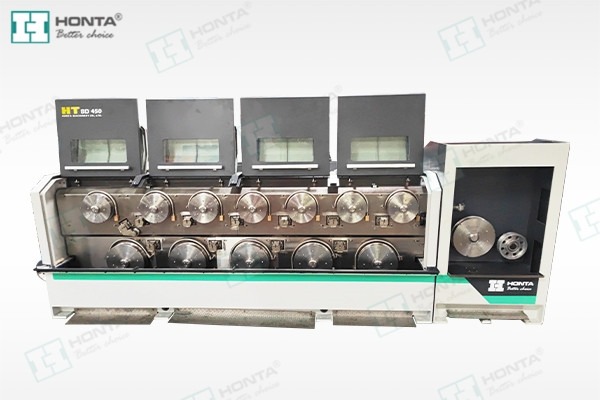
A compact rod breakdown machine, ideal for space-constrained facilities or specific production ranges.
Key Technical Features to Evaluate
Once needs are clear, evaluate these core technical aspects of the multiwire drawing machine.
1. Drive System: Individual Motors vs. Traditional
The drive system is the heart of the machine. Traditional systems use a single motor with a gearbox, which can be less flexible. Modern individual motors multiwire drawing machine systems, like those pioneered by HONTA machine, assign a dedicated motor to each drawing capstan.
Advantages of Individual Motors:
- Precise Speed Control: Each wire's speed can be independently adjusted, optimizing tension and reducing breaks.
- Higher Efficiency: Eliminates power losses through complex gear trains.
- Easier Maintenance: Modular design allows for quicker troubleshooting and part replacement.
- Flexibility: Easier to adapt to different wire sizes and materials without major mechanical changes.
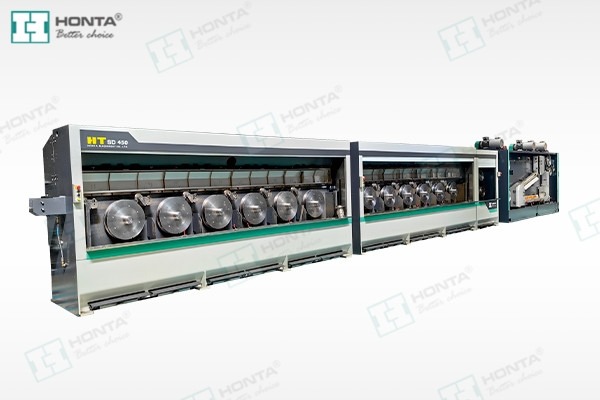
2. Annealing Integration: Inline vs. Offline
Annealing softens the wire after drawing, crucial for flexibility. An inline annealer machine integrated into the drawing line offers significant benefits:
- Space Saving: Combines two processes into one continuous line.
- Energy Efficiency: Uses the wire's residual heat, reducing overall energy consumption.
- Improved Consistency: Provides uniform annealing as the wire is drawn, leading to better product quality.
For operations processing both copper and aluminum, a versatile rod breakdown with annealer machine for copper and aluminium from a reliable supplier like HONTA is a smart investment.
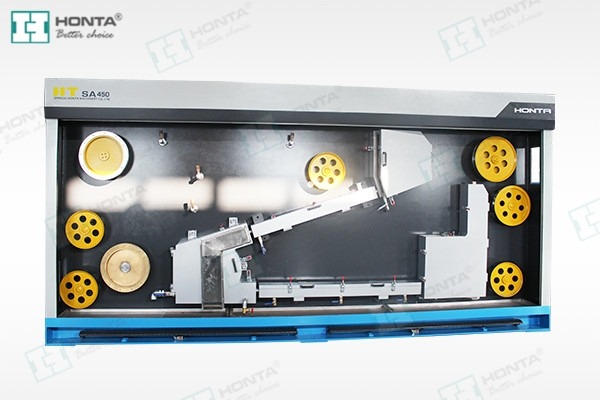
3. Take-Up System: Spooler or Coiler?
How the finished wire is collected affects downstream handling. Common options include:
- Single Spooler: Winds wire onto one large spool. Simple and cost-effective for certain applications.
- Double Spooler: Allows continuous production; one spool fills while the other is replaced, minimizing downtime.
- Basket Coiler: Coils wire loosely into a basket or barrel, ideal for large volumes that will be further processed (e.g., stranding). It's often paired with a robust wire take up machine.
The choice depends on your next production step and automation level.
Beyond the Machine: The Importance of Supplier Credentials
The best wire drawing machine is only as good as the company behind it. When evaluating wire and cable equipment suppliers, consider:
- Experience & Reputation: HONTA, established in 2006, has nearly two decades of expertise in cable conductor technology and collaborates with global cable companies.
- Global Support: With a production base in the United States (HONTA INC. established in 2017), they offer localized service and support, a significant advantage for international buyers.
- Quality Certifications: Always verify certifications. HONTA holds ISO 9001 for quality management and ISO 14001 for environmental management, ensuring reliable and responsibly manufactured equipment.
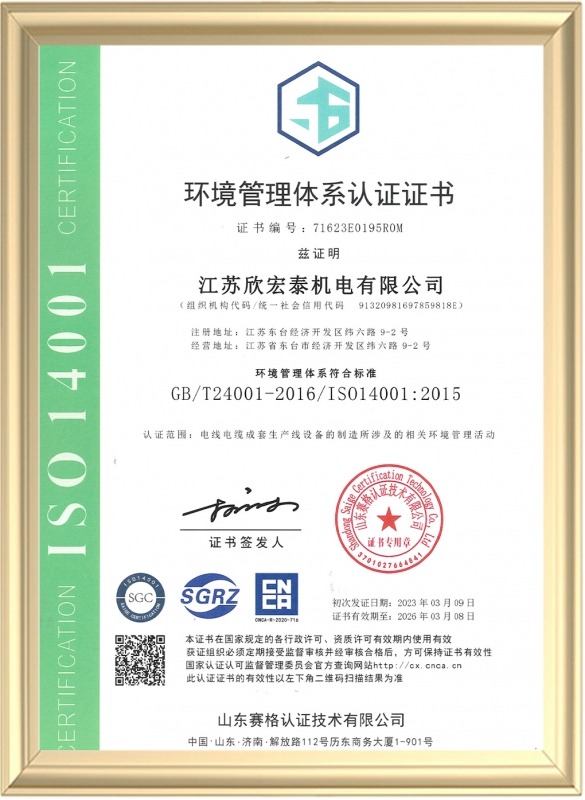
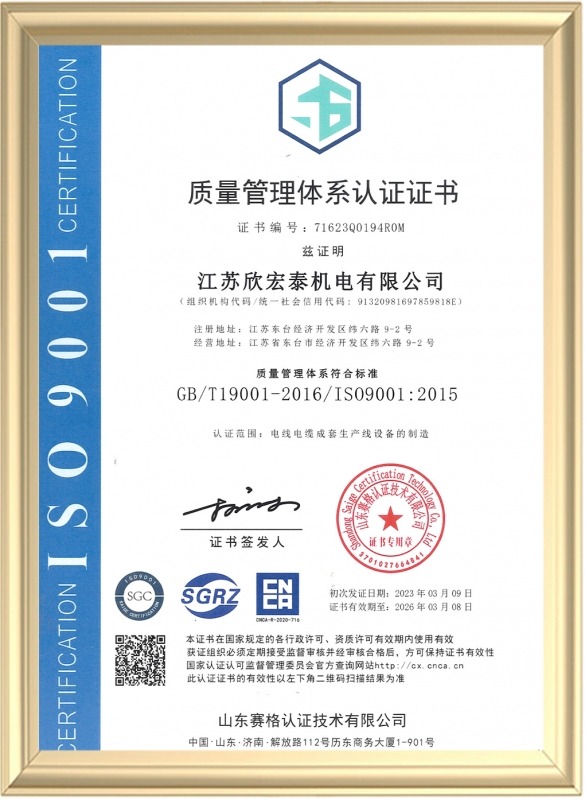
HONTA's ISO certifications are a testament to their commitment to quality and sustainable practices.
Industry Context: Why This Choice Matters Now
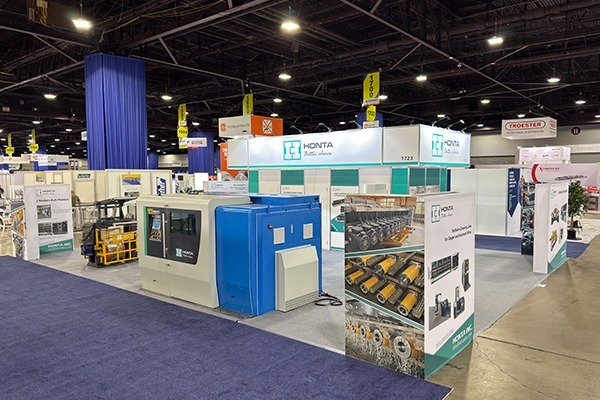
The wire & cable machinery sector is evolving rapidly. Recent trends observed at major trade shows like the 2025 Interwire Expo in Atlanta highlight a push towards:
- Greater Automation: Reducing labor dependency and improving consistency.
- Energy Efficiency: Machines with individual drives and regenerative systems are in high demand to lower operational costs.
- Data Integration: Smart machines that provide production analytics for predictive maintenance and optimization.
Choosing a forward-thinking partner like HONTA, which actively participates in these global forums, ensures your investment is future-proof.
Making the Final Decision: A Checklist
- Audit Your Needs: Output, material, wire size.
- Prioritize Technology: Opt for an individual motors multiwire drawing machine for flexibility and efficiency.
- Evaluate Integration: Consider an inline annealer machine for a streamlined process.
- Assess the Take-Up: Select a double spooler or basket coiler based on your workflow.
- Vet the Supplier: Check for experience, global presence (like HONTA's U.S. base), and certifications (ISO 9001, ISO 14001).
- Request a Demo: See the machine, perhaps a 16 wires multiwire drawing machine or a copper rod breakdown machine, in action if possible.
Investing in the right multiwire drawing machine is a strategic move that enhances your competitiveness. By focusing on your specific needs and partnering with a technologically advanced and reputable wire and cable machine manufacturer like HONTA, you can build a production line that is not only high-speed and efficient but also automated and humanized in its operation.
Ready to upgrade your wire drawing capabilities? Contact the experts at HONTA to discuss your project requirements for a rod breakdown machine, multiwire drawing line, or complete wire & cable machinery solution.
HONTA
Phone: 0086 182 6287 9467 / WhatsApp: 0086 187 5292 2675
WeChat: wtammy0631
Email: tammy@jshonta.com
Website: www.jshonta.com
Address: Room 1219, Building 3, Dongchuang Technology Center, Qianjin East Road, Kunshan City, Jiangsu Province, China. Zip:215300