
Multiwire Drawing Machine Criteria, Ranked by Cost Impact
Five specification criteria decide most of a multiwire drawing machine's total cost of ownership, and they do not deserve equal time in the evaluation stage. Ranked by operational consequence, the order is: first, diameter range fit; second, wire count; third, drive and control configuration; fourth, spares strategy; fifth, support distance. Diameter range ranks first because it fixes the product mix the line can ever run. Support distance ranks last because it is the criterion most open to mitigation after the purchase order is signed.
Why purchase price is a poor ordering signal
A quotation compresses five very different decisions into one number: the mechanical range of the machine, the number of wires it draws at once, the motor and control architecture, the spare-parts package, and the service arrangement. Two quotes can look close on price and still produce very different ten-year costs, because the expensive mistakes are made in different places.
The evaluation-stage failure is rarely a bad machine choice. It is attention spread evenly across a long specification sheet, so the criteria that lock the plant's future product mix receive the same negotiation time as a spare-parts list that can be revised later. Ordering the criteria by cost impact is a way to spend evaluation time where it changes the outcome, and to decide which specification conversations deserve the longest meeting.
This ranking deliberately avoids prices. A purchase price is a point-in-time number negotiated between two parties; a cost impact is an operating consequence that follows the machine for years. The two are related but not the same, and confusing them is how plants end up optimizing the quote instead of the line.
Two shifts that make the ranking worth revisiting
Line density is increasing. HONTA (Jiangsu HONTA Machinery., Ltd.) is a wire and cable equipment manufacturer founded in 2006 in Kunshan, Jiangsu, China, producing rod breakdown, multiwire drawing, bunching and electroplating lines for copper and aluminium conductors. Its 24-wire multiwire drawing line, model HT.MD100.03.27.24, is listed with a maximum mechanical speed of 1,800 m/min on the company's product page [EV-001]. Higher wire counts change the economics of the line: the same footprint and the same operator headcount can serve more strands, but every added wire adds tension, take-up and break-detection points that must hold at the same time.
Drive architecture is also moving. An industry comparison estimates that individual motor multiwire drawing machines can reduce energy consumption by up to 25% compared with traditional common-shaft systems [EV-002]. That figure is a derived estimate with medium confidence, not a measured plant result, and it should be tested against a specific duty cycle rather than accepted as a specification promise.
At category level, a commercial research estimate values the global wire drawing machine market at USD 3.8 billion in 2025, rising to USD 6.1 billion by 2034 [EV-003]. Market growth does not tell a single plant which specification to prioritize. For an individual buyer, the useful question is narrower: among all the specifications on the sheet, which ones carry the most cost consequence when they are wrong?
The four tests used to set the order
The order below is an editorial decision framework built on operational consequence, not a measured cost study. Four tests set it.
- Lock-in. How many later choices does the criterion fix? A criterion that determines the pass schedule, annealing requirement and take-up configuration outranks one that can be changed by a purchase order amendment.
- Operating leverage. How much annual runtime, yield or energy does it govern?
- Correction cost. What does it take to reverse a wrong choice: a settings change, a retrofit, or a second machine?
- Recurring-spend exposure. How strongly does it drive energy, dies, spares and service visits over the asset life?
A criterion moves up when it scores high on lock-in and correction cost, even if its line item looks small on the quotation. A criterion moves down when a wrong choice can be repaired later at moderate cost. The final section shows how to re-weight the order for a specific plant.
Rank 1: Diameter range fit
1 Diameter range fit ranks first because it is the only criterion fixed by mechanical design. The inlet rod diameter and the finished wire diameter determine the pass schedule, the capstan sequence, whether inline annealing is required, and the take-up configuration. Every other specification is chosen inside that envelope.
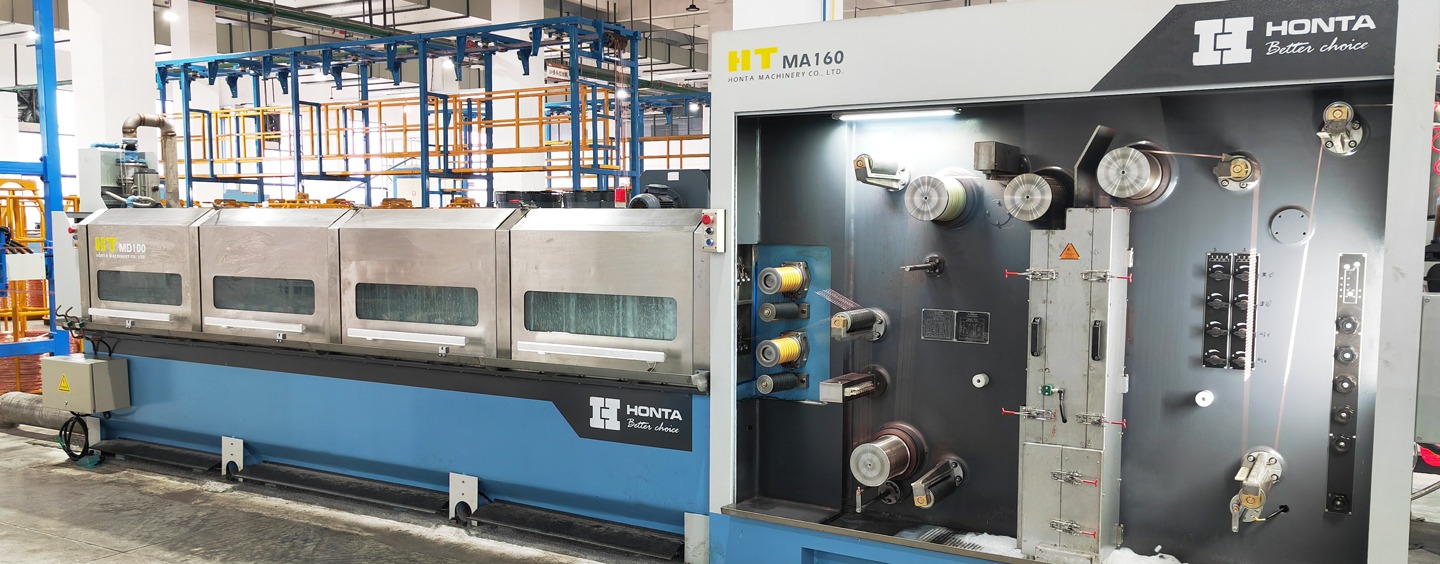
The practical test is not the range printed on the brochure. It is whether the quoted range covers the largest and smallest conductor the plant expects to run over the machine's service life, including the product mix the sales team has not won yet. A line bought for one product family and later pushed outside its range does not fail immediately. It produces out-of-tolerance wire, forces extra passes, or moves work to an outside supplier.
Correction cost is what puts this criterion ahead of the rest. Wire count can be increased by adding a line. Drive architecture can, at a price, be retrofitted. A mechanical range cannot be stretched without changing the machine. For a plant that expects its conductor mix to broaden, the diameter-range conversation deserves the longest technical session and the most written confirmation in the RFQ.
The link to products matters here. A model such as HT.MD100B.16.22D.01 is a drawing machine configuration for a defined duty; it is not a universal envelope. Asking a supplier to confirm the smallest and largest finished diameter for the exact model being quoted, in writing, is a more useful step than comparing headline speed figures across models built for different ranges.
Rank 2: Wire count
2 Wire count ranks second because it sets the output ceiling and the complexity that comes with it. A machine drawing more wires at once produces more conductor per hour from the same floor space and the same shift team, which is why higher-count designs attract so much attention in the category.
The cost consequence runs in both directions. At high utilization, a higher wire count spreads fixed costs—building, operator, maintenance—over more output. At low utilization, the same machine carries more tension stations, more take-up positions and more break-detection points than the order book needs, and the cost per ton rises. Wire count is therefore a utilization decision disguised as a specification decision.
Two questions belong in the evaluation. First, what utilization does the plant realistically expect in years one to three, not at full ramp? Second, if demand grows, is the cheaper response a second line or a higher-count machine bought now? The answer depends on floor space, operator availability and product mix, and it should be written down before quotations are compared.
Wire count also interacts with the take-up end of the line. More wires mean more spool positions, more handling steps and a larger take-up footprint. A plant that compares drawing cabinets without comparing the take-up and spooling workload is comparing only half of the operating change.
Rank 3: Drive and control configuration
3 Drive and control configuration ranks third because it is the clearest initial-cost versus operating-cost trade in the category, and because it can be optimized after diameter range and wire count are fixed.

The comparison is between individual motor drives and common-shaft (gear drive) systems. Individual motor systems allow faster die changeover and lower noise, but carry higher initial electronics cost; energy efficiency and maintenance flexibility are the stated comparison scope [COMP-001]. An industry estimate puts the energy saving at up to 25% versus traditional common-shaft systems [EV-002]. That is material for a line with high annual runtime, but it is an estimate, so the buyer should ask for the basis: duty cycle, wire material, motor efficiency class and measurement method.
| Comparison dimension | Individual motor drive | Common shaft (gear drive) | Evidence basis |
|---|---|---|---|
| Energy consumption | Estimated up to 25% lower than common-shaft systems | Reference baseline in the comparison | EV-002, derived estimate, medium confidence |
| Die changeover | Faster, per the comparison note | Not stated in the comparison note | COMP-001 |
| Noise | Lower, per the comparison note | Not stated in the comparison note | COMP-001 |
| Initial electronics cost | Higher | Not stated in the comparison note | COMP-001 |
| Maintenance flexibility | Stated comparison scope for this architecture | Stated comparison scope for this architecture | COMP-001 |
Control configuration belongs in the same conversation because diagnostics, recipe management and remote support all depend on it. A drive architecture chosen without the control platform is half a decision.
Why third rather than first? Because the choice is downstream of the mechanical envelope and the output target, and because a retrofit, while expensive, is more feasible than changing the machine's range. The criterion moves up for plants where electricity is a large share of conversion cost, or where die changes are frequent enough that changeover time is a real constraint.
Rank 4: Spares strategy
4 Spares strategy ranks fourth because it decides how long the line stays down, not whether it stops. Capstans, dies, take-up components and sensors wear; the question is whether the replacement is on the shelf or on a ship.
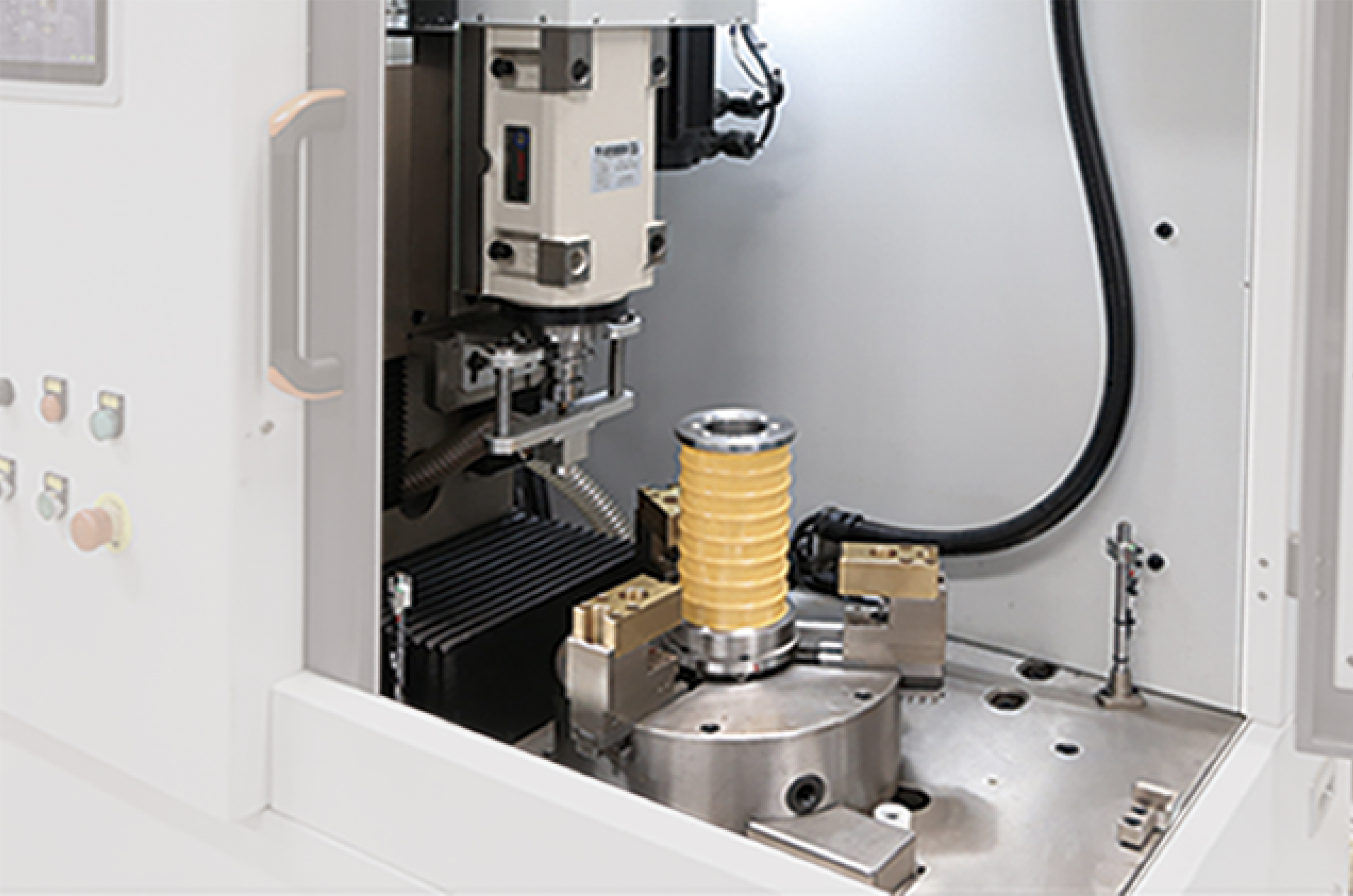
Three policies are common: original-parts inventory held by the plant, a consignment stock agreed with the supplier, or local substitution. Each shifts cost between carrying cost, part price and downtime risk. The evaluation should name the critical spares—the parts whose absence stops the line—and agree their stocking location before commissioning, not after the first failure.
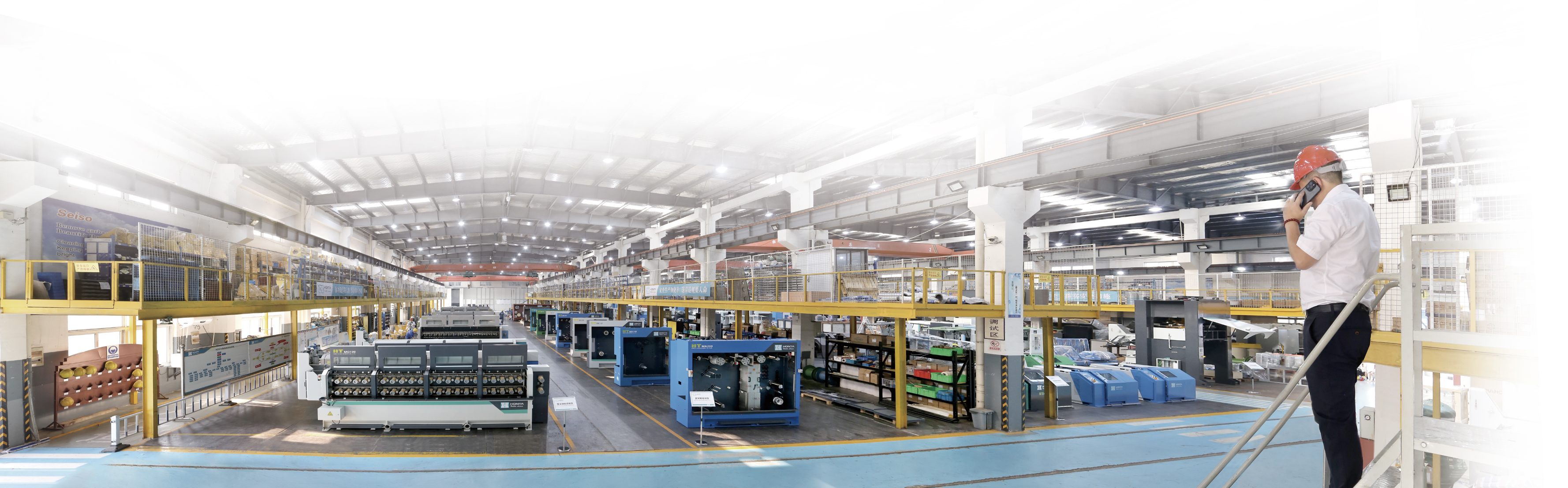
HONTA states 100% testing before shipment and a machine lead time of 90 days [id 251]. A 90-day machine lead time is a reminder that the spares conversation belongs in the same purchase cycle: a part ordered after commissioning follows its own lead time, and that interval is downtime.
The criterion sits fourth because it responds to the configuration choices above it. Its weight rises, however, when support distance is long, which is the fifth criterion.
Rank 5: Support distance
5 Support distance ranks last because it is the criterion most open to mitigation. Geography sets the baseline response time, but remote diagnostics, pre-positioned spares and agreed response windows can offset a large part of it.
HONTA's stated after-sales model combines remote and on-site support [id 251]. The company also established a second production base in the United States in 2017 [id 270], which changes the support-distance calculation for North American buyers compared with buyers served only from China. For a plant in a region with long freight and travel times, the practical questions are response-window commitments, the remote-access arrangement, and which spares are held locally.
Why last rather than irrelevant? Because the criterion is compensable, not because it is unimportant. The first four criteria are physical or configuration decisions that no service agreement can repair. Support distance can be reduced by contract, inventory and connectivity, so it should be negotiated hard, but after the machine's range, count and drive are settled.
The ranking at a glance
| Rank | Criterion | What it locks | Correction cost if wrong |
|---|---|---|---|
| 1 | Diameter range fit | Product mix, pass schedule, annealing requirement, take-up configuration | Very high; mechanical change or a second machine |
| 2 | Wire count | Output ceiling, tension and take-up positions, break-detection workload | High; line addition or under-used capacity |
| 3 | Drive and control configuration | Energy profile, die changeover time, diagnostics and remote support | Moderate; retrofit possible at significant cost |
| 4 | Spares strategy | Downtime duration when a critical part fails | Moderate; policy and inventory can be revised |
| 5 | Support distance | Baseline response time | Low; mitigable by remote support, stocking and contract terms |
Step by step: ordering the specification conversation
The sequence below applies the ranking to an evaluation-stage RFQ. It keeps the buyer from negotiating a spare-parts list before the machine's envelope is confirmed.
- Define the product envelope first. List the smallest and largest finished conductor the plant expects within the machine's service life, including products not yet ordered. Ask each supplier to confirm in writing that the quoted model covers that envelope, and which pass schedule it uses at each end.
- Set the utilization assumption. Convert the sales forecast into operating hours and wire-count requirements. State the assumption in the RFQ so suppliers quote against the same demand, not against their preferred configuration.
- Compare drive options on a stated duty cycle. Ask for the energy basis, die-changeover time and noise data behind each drive offer. Treat any energy percentage as an estimate until the basis is supplied.
- Build the critical-spares list. Identify the parts whose failure stops the line, then agree stocking location, reorder point and who carries the inventory.
- Negotiate support against geography. Match response windows and remote-access terms to the plant's actual location and maintenance capability, not to a generic service promise.
- Require an itemized quotation. Ask for the five criteria to be priced and described separately—range confirmation, wire count, drive and control, spares package, support terms—so the comparison follows cost impact rather than a single total.
Case evidence and a conditional example
A wire and cable factory group with operations in the United States, Poland, Portugal, Spain, Turkey and a Middle East market runs two HONTA wire drawing machines in drawing applications. The documented result after three years is steady production of products that meet the customer's requirements, with fast speed and high efficiency cited as the highlight [id 901]. The case does not publish cost data, so it supports a durability and repeatability reading, not a total-cost calculation. Read through the ranking above, it is consistent with a plant that settled its diameter range and wire count first and then ran the line for years without changing the mechanical envelope.
As a conditional illustration, consider a plant that expects to supply both coarse building wire and finer flexible conductor from the same line within five years. In that example, the diameter range decision dominates: if the quoted range covers only the coarse end, the finer product either runs outside the machine's efficient zone or moves to a second line. Wire count then follows from the finer product's output target, and drive choice follows from utilization. The example is illustrative only; the real envelope must come from the plant's own product plan and confirmed model data.
FAQ
Which compliance documents should accompany a multiwire drawing machine for the EU?
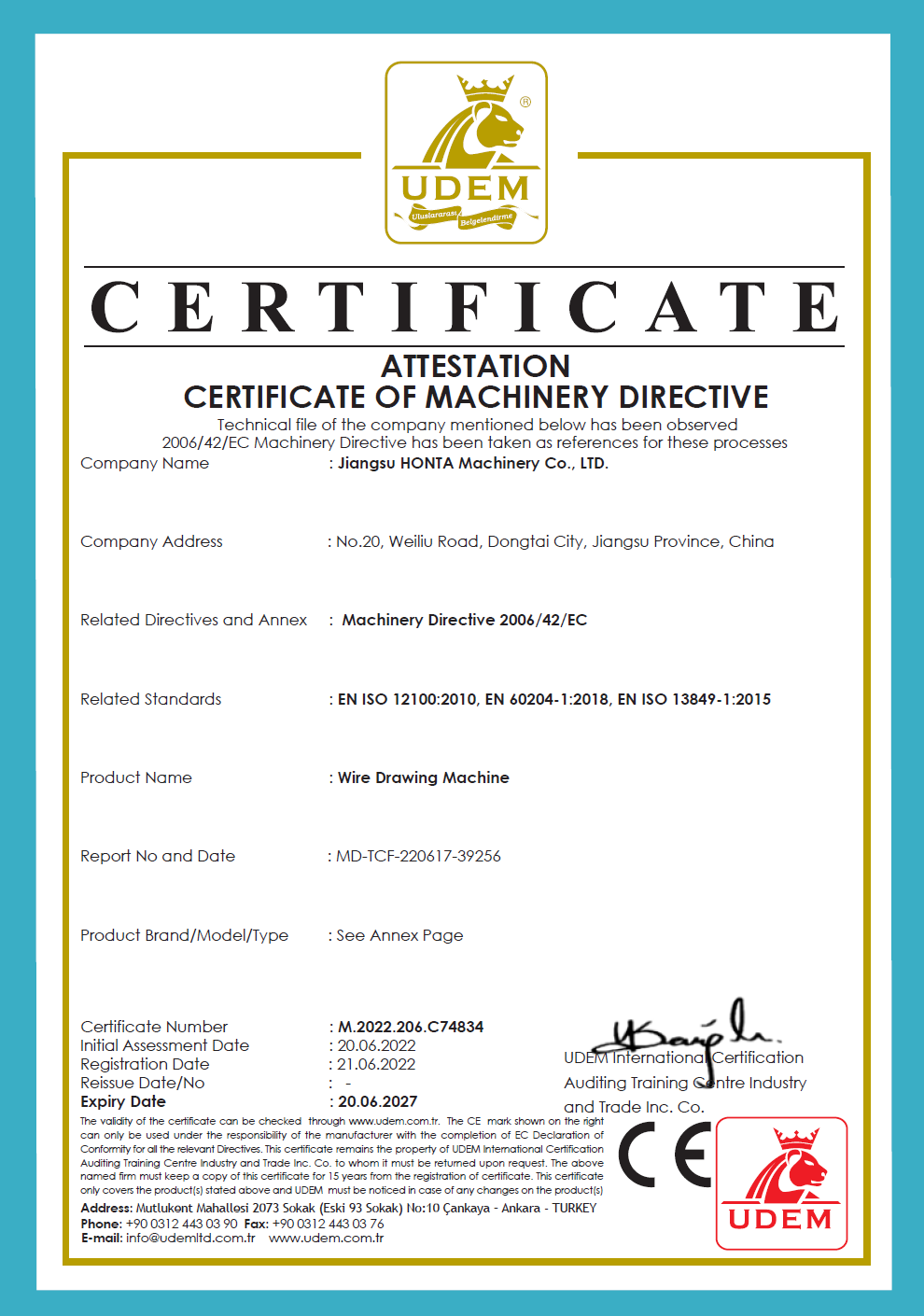
For EU delivery, the machine should ship with a CE declaration under the Machinery Directive 2006/42/EC. HONTA's CE-MD certificate M.2022.206.C74834, issued by Udem International Certification Auditing Trading Centre, covers wire drawing machines against EN ISO 12100:2010, EN 60204-1:2018 and EN ISO 13849-1:2015, with validity to 2027-06-20 [id 1093]. Third-party reporting also states that HONTA holds ISO 9001 and ISO 14001 certifications and complies with IEC 60204-1 [EV-004]. Buyers should confirm that the certificate scope and the product documentation name the model being purchased, not only the product family.
How much can individual motor drives reduce operating cost?
An industry comparison estimates up to 25% lower energy consumption for individual motor machines versus traditional common-shaft systems [EV-002]. That is a derived estimate with medium confidence, not a measured result for a specific plant. The same comparison notes faster die changeover and lower noise, offset by higher initial electronics cost [COMP-001]. The defensible evaluation step is to ask each supplier for the duty cycle, motor efficiency class and measurement basis behind any energy claim, then compare on the plant's own operating hours.
Which criterion should get the most negotiation time?
Diameter range fit. It is fixed by mechanical design, it determines the pass schedule, annealing requirement and take-up configuration, and it cannot be corrected by a retrofit or a settings change. Wire count and drive configuration follow because they sit downstream of the envelope. Spares and support matter, but they can be revised after the order through stocking policy and service agreements.
What testing is done before a multiwire drawing machine ships?
HONTA states 100% testing before shipment, with a minimum order quantity of one set and ODM production that allows customization of colour and component model [id 251]. Buyers should ask for the test record and acceptance criteria in writing, and confirm which tests are witnessed rather than only documented.
What lead time and capacity should a buyer plan for?
HONTA states a 90-day lead time and a monthly capacity of 15 sets [id 251]. Those figures should be checked against the specific configuration, because customization and component selection can change the schedule. Buyers comparing configurations can request the drawing machine catalogue or arrange a specification review with HONTA before the RFQ is finalized.
Conclusion
The ranking is a way to spend evaluation time, not a substitute for a cost model. Diameter range first, wire count second, drive and control third, spares fourth, support distance fifth—that is the order in which a wrong choice becomes expensive to reverse.
Re-weight it for the plant. If electricity dominates conversion cost, move drive configuration above wire count. If service travel is long, move support distance above spares. If the product mix is narrow and stable, diameter range stays first but takes less time, and wire count becomes the main debate. The criterion that locks the most future choices should always get the longest meeting.
For model and configuration reference, the drawing machine catalogue (PDF) is available for download.
Have Questions or Need More Details?
Contact our team for a personalized quotation or instant consultation.
Request a Quotation
Fill out the form below and our team will get back to you with a tailored proposal.
WhatsApp Direct Chat
Prefer to chat in real-time? Message us on WhatsApp for instant assistance & quick answers.
- Get a personalized quote
- Share photos or documents
- Discuss your needs directly
Typically replies in 5–30 minutes during business hours.