
Copper vs. Aluminium Multiwire Drawing: Process Requirements
Short answer: copper and aluminium multiwire drawing diverge in five process areas — die selection, lubrication and cooling, tension control, surface handling, and downstream processing. The divergence is not a matter of entering a different speed on the same recipe. Aluminium is softer, carries a harder and faster-reforming oxide film, and responds to deformation heat differently from copper. Those three material properties move the friction, tension and temperature window that the whole line is built around, so a configuration tuned for copper rod does not transfer to aluminium without a line-level review.
This guide is written for a buyer at the decision stage: a plant that already knows it needs multiwire drawing capacity and now has to specify, quote or convert a line for a particular conductor mix. Each section states what changes, why it changes, and what to confirm with a supplier before the configuration is frozen.
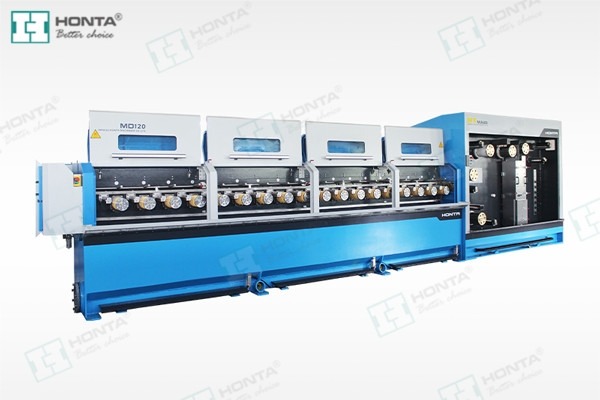
Conductor-specific configuration decisions start with the metal being drawn, not with the machine frame.
Why a line tuned for copper does not simply run aluminium
Multiwire drawing multiplies one drawing process across many wires at once. That multiplication is what makes the process sensitive to conductor properties: every die, every capstan and every tension zone is replicated across the wire set, so a small change in friction or elongation that would be absorbed on a single-wire machine becomes a systematic effect across the whole group.
Three material differences drive the copper–aluminium split.
Strength and flow stress. Aluminium offers lower resistance to deformation than copper at the same reduction. Lower flow stress sounds like an easier draw, but it also means the wire has less ability to resist being pulled, marked or flattened by the tooling. The permissible tension per unit of cross-section is lower, and the margin between a stable draw and a stretched or broken wire is narrower.
Surface chemistry. Aluminium forms an oxide film that is hard, abrasive and re-forms quickly after it is disturbed. Copper also oxidises, but copper oxide behaves differently at the die and in the lubricant tank: it is softer, and it is managed through different cleaning and tarnish-control routines. An abrasive, tenacious film increases die wear and changes what the lubricant has to do.
Heat and adhesion. Aluminium is more prone to pick-up and smearing on die bearings and capstan surfaces when the lubricant film breaks down, and its thermal behaviour means the heat generated in the deformation zone is distributed and removed differently. A lubricant and cooling arrangement that keeps copper stable may leave aluminium operating with less film margin than the metal needs.
The practical consequence: a copper-tuned line is a valid baseline, not a transferable specification. Dies, lubricant circuit, tension settings, annealer settings, contact surfaces and take-up tension all sit downstream of these three differences.
Where multiwire drawing sits in the conductor line
Multiwire drawing is a finishing stage, not a standalone process. Rod first passes through rod breakdown, then the multiwire machine draws the intermediate wire down to final conductor sizes across 8, 16, 24 or 32 wires, with annealing, spooling or coiling, and stranding or bunching downstream. The conductor choice at the multiwire stage is therefore also a choice about the breakdown line that feeds it and the take-up equipment that receives it.
Jiangsu HONTA Machinery., Ltd. (HONTA), founded in 2006 and based in Kunshan, China, builds equipment across that chain: copper and aluminium RBD lines, multiwire drawing line series, high-speed stranding lines and wire electrolytic plating lines. Because the same builder supplies the breakdown and the multiwire stages, the copper-versus-aluminium question can be handled as a line-level configuration rather than as an isolated machine specification.
The scale of the step from single-wire to multiwire drawing is worth stating plainly. HONTA's own comparison material positions multiwire drawing against single-wire drawing at a 32-fold output gap, with lower unit production cost and reduced manual handling. That is a supplier comparison rather than an independent benchmark, so a buyer should test it against their own output target, wire size range and shift pattern — but it explains why the conductor-specific details below carry commercial weight: a mis-tuned multiwire line multiplies its error across every wire it runs.
Speed capability at the top of the range is documented rather than assumed. HONTA's 24-wire multiwire drawing line, model HT.MD100.03.27.24, is listed at a maximum mechanical speed of 1,800 m/min in the company's product documentation. Buyers should read such figures as the machine's mechanical ceiling and confirm the sustained speed their own conductor, dies and lubricant will support.
Die selection: flow stress and pick-up decide the die
Die selection is where the copper assumption is most often carried over by default. Approach angle, bearing length, reduction per pass and the polishing standard are set by the flow stress of the metal and by the friction conditions at the bearing — not by a standard die series that happens to have worked on copper.
With aluminium, two die-related risks rise. The first is pick-up: soft metal transfers onto the bearing surface when the lubricant film thins, and once material has transferred, the die stops drawing cleanly and starts marking. The second is abrasion from the oxide film, which attacks the die entry and bearing. Both risks push the specification toward a highly finished bearing and a geometry that keeps the metal flowing rather than smearing, and both shorten the interval at which dies should be inspected.
With copper, die life is dominated by a different mix: abrasive wear from the oxide and from inclusions in the rod, and the thermal load at higher reductions. Copper tolerates a wider working range, which is exactly why a copper die set feels forgiving and why that forgiveness does not survive the move to aluminium.
For the buyer, the decision-relevant questions are: which die series is proposed for the target wire range, what polishing and inspection standard applies, how die wear is monitored in production, and who supplies first-fill and replacement dies. A quote that lists dies without connecting them to the conductor being drawn has not yet answered the process question.
Lubrication and cooling: the film has to survive a different metal
Lubrication is the area where a copper-to-aluminium switch most often shows up first and most expensively. The lubricant has three jobs — separate the wire from the die, carry heat out of the deformation zone, and keep wear debris and oxide in suspension so it can be filtered out.
Aluminium changes the balance of all three. Because the metal picks up more readily, the lubricant's additive package has to control adhesion at the bearing rather than only reduce friction. Because the oxide is abrasive and re-forms, filtration has to remove fine particulate before it circulates back to the dies. Because heat is generated and removed differently, the cooling and circulation design — tank volume, flow, heat exchange — has to be reviewed against the aluminium duty rather than inherited from the copper duty.
Copper lubricants are not automatically wrong for aluminium, but they are not automatically right either. Where a plant intends to run both metals, the practical questions are whether one lubricant can serve both without compromising either, how the tank is managed between campaigns, and what the supplier specifies for concentration control and change intervals. Emulsion systems and neat oils behave differently here, and the choice interacts with the annealer and with downstream plating.
Plating matters specifically for copper. HONTA's range includes wire electrolytic plating lines, which sit downstream of drawing for copper conductors; lubricant residues and surface condition at the drawing stage affect what the plating line receives. Aluminium conductors follow a different downstream route, so the lubricant decision should be made with the finishing process in view, not in isolation.
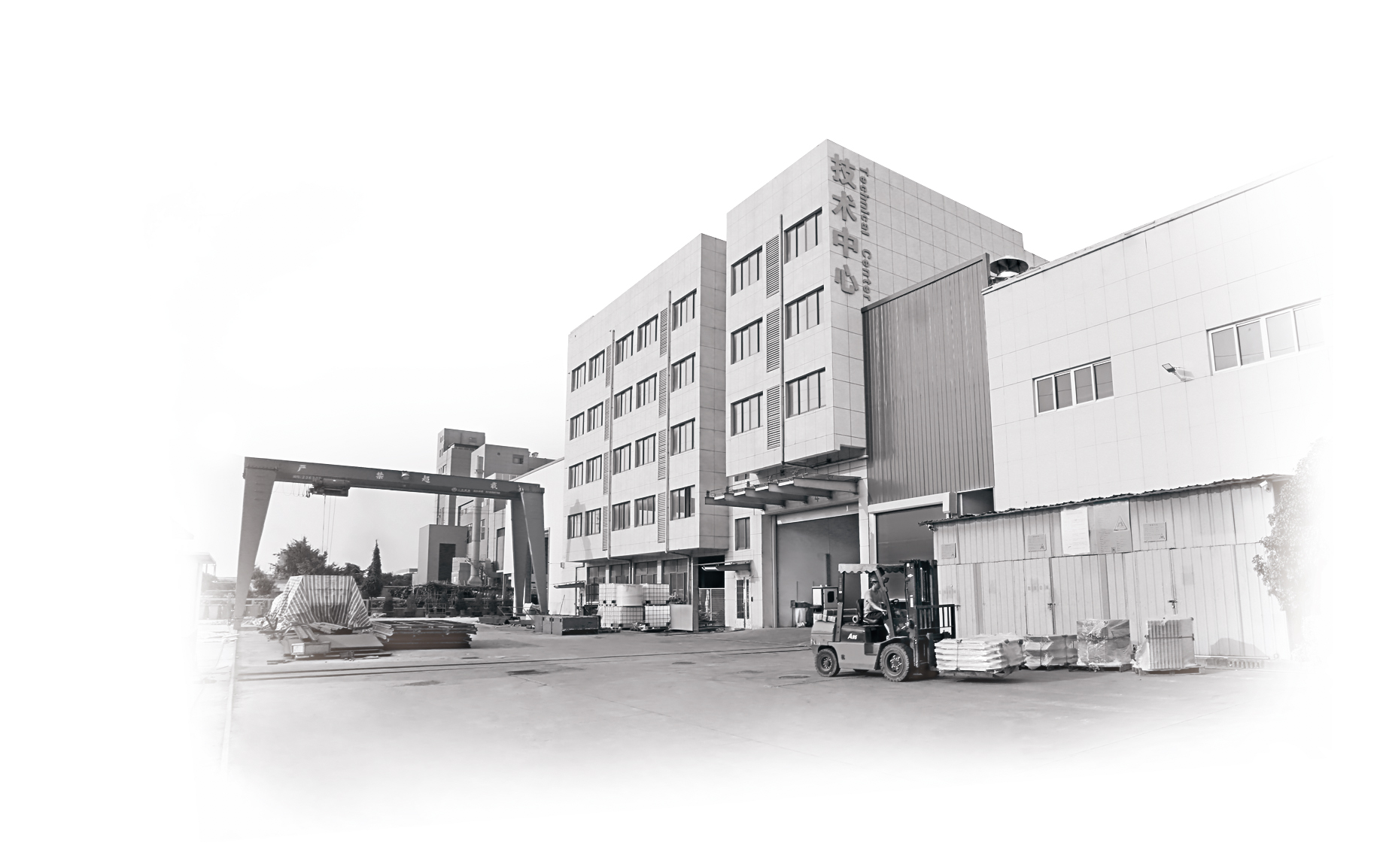
Process windows for a new conductor are established in engineering before they are fixed in a production specification.
Tension control, capstans and slip
Tension control is the second area where aluminium punishes assumptions carried over from copper. Every wire in the group has to be drawn at a tension that keeps it in contact with its capstan without stretching it, and the acceptable band is narrower for the softer metal.
Three things follow. Dancer and accumulator response has to be tuned for the lower tension band, so that the control loop reacts to small disturbances without hunting. Capstan and slip design has to be reviewed against the friction the aluminium actually generates with the specified lubricant, because slip that is stable on copper can become the point where pick-up starts. And per-wire monitoring becomes more valuable, since a single wire drifting out of band in a 24-wire or 32-wire group is much harder to detect by eye than on a single-wire machine.
Drive architecture interacts with this. On an individual-motor multiwire drawing machine, each capstan shaft can be set independently, which supports per-wire speed and tension adjustment; a common-shaft, gear-driven machine ties the shafts together mechanically. An HTNXT technical analysis published in 2026 notes that individual-motor drives also allow faster die changeover and lower noise, at the cost of higher initial electronics content, and estimates energy savings of up to 25% against traditional common-shaft systems. That figure is an estimate rather than a measured plant result, so it belongs in the evaluation as a claim to be verified, not as a settled number.
For aluminium duty specifically, the practical value of independent shaft control is that the tension window is narrower and re-tuning after a die change is more frequent. Whether that justifies the electronics cost depends on the conductor mix, the number of size changes per week and the plant's energy price — not on the metal alone.
Surface handling: oxide, pick-up and spooling damage
Surface handling covers everything between the last die and the spool: wire guides, contact rollers, wiping, and the wind itself. Aluminium is less forgiving at every one of these points, for the same reason it is less forgiving in the die — the metal deforms under contact pressure and the oxide film is abrasive.
Guide and contact surfaces therefore need review for material and finish, and their wear condition needs to be part of routine inspection rather than a breakdown response. Wiping and cleaning stations have to be assessed against the oxide the process actually produces, not the oxide a copper line produces. And the wind itself matters: softer wire compresses on the spool, so winding tension and spool specification both need to be set for aluminium if the spool is to pay off cleanly at the next stage.
Copper's surface concerns are different but not absent. Tarnish control before plating or bunching, and the removal of drawing residues, are routine copper requirements that do not map onto an aluminium line in the same form.
Downstream processing: annealing, plating and take-up
Annealing is the clearest example of a setting that cannot be copied across. Copper and aluminium recrystallise in different temperature ranges, and the softer metal has less tolerance for over-softening: an annealer tuned for copper will not deliver the intended properties on aluminium, and the risk of wire sticking or deforming rises as the metal softens. An inline annealer machine specified for a dual-metal line should therefore be assessed on its control range and on the evidence the supplier can provide for temperature uniformity across the wire group, not simply on the fact that an annealer is included.
Take-up and spooling complete the picture. The choice between a single spooler, a double spooler and a basket coiler is partly a packaging decision and partly a conductor decision: softer aluminium wire needs a winding tension profile and spool support that prevent the coil from collapsing or deforming, while copper's stiffness allows a wider range. For a plant running both metals, the take-up specification should be written against the softer conductor, because a take-up that handles aluminium will handle copper, but not the reverse.
Side-by-side process requirement table
The table below summarises where the requirements diverge and what a buyer should ask to see in the offer. It is a comparison of documented requirements, not a performance ranking of the two conductors.
| Requirement | Copper conductor | Aluminium conductor | What to verify in the offer |
|---|---|---|---|
| Die geometry and finish | Higher flow stress gives a wider working range; die life driven by abrasive wear | Lower flow stress, higher pick-up risk; bearing finish and geometry carry more weight | Die series for the target size range, polishing and inspection standard, replacement interval |
| Lubricant and filtration | Formulated for copper; copper fines and oxide load in the tank | Must control adhesion and staining on aluminium; fine abrasive oxide must be filtered out | Lubricant type, concentration control, filtration rating, whether one lubricant serves both metals |
| Tension and slip | Higher permissible tension per unit area; wider control band | Narrower tension band; more sensitive to dancer and capstan variation | Per-wire tension control, dancer specification, slip design, alarm and monitoring method |
| Capstans and contact surfaces | Wear inspection against abrasive oxide | Pick-up and marking risk on capstans and guides | Capstan and guide material and finish, wear-part list and spare availability |
| Annealing | Annealer tuned to copper's recrystallisation range | Different temperature window; over-softening and sticking risk | Annealer suitability for the alloy, control range, evidence of temperature uniformity |
| Surface handling | Tarnish control before plating or bunching | Abrasive oxide, contact resistance and solderability concerns downstream | Cleaning or wiping arrangement, inspection method, acceptance criteria for surface |
| Take-up and spooling | Standard winding tension; wire stiffness aids the wind | Softer wire compresses on the spool; lower winding tension and barrel support | Single spooler, double spooler or basket coiler, tension profile, spool specification |
| Rod breakdown feeding the line | Copper rod breakdown line ahead of multiwire drawing | Aluminium rod breakdown with its own reduction schedule | Whether the RBD line is single-metal or dual-purpose, and the reduction schedule proposed |
| Changeover | Baseline configuration | Requires re-tuning, not just a die swap | Documented changeover procedure, time estimate, list of parts that must be exchanged |
Converting a copper specification into an aluminium specification: five steps
Step 1 — Restate the finished wire requirement. Start from the conductor the plant must deliver: wire size range, temper or elongation requirement, surface condition and the downstream process it feeds. The copper specification is an input to this step, not the specification itself.
Step 2 — Re-derive the reduction schedule. With lower flow stress, the pass schedule and the number of drafts need to be re-derived against the aluminium being drawn, and checked against what the breakdown line upstream can deliver.
Step 3 — Re-specify dies and lubricant together. These two cannot be settled separately. The die geometry has to be matched to the friction the lubricant produces on aluminium, and the lubricant has to be matched to the filtration and cooling the line can provide.
Step 4 — Re-set tension, slip and take-up. Tune the dancer and accumulator response to the narrower band, review capstan and slip behaviour with the chosen lubricant, and set winding tension and spool support for the softer wire.
Step 5 — Re-qualify the annealer and the acceptance test. Confirm the annealer's range covers the aluminium duty, then write acceptance criteria — break rate, surface, elongation, spool quality — into the order so that the line is proven on the conductor it will actually run.
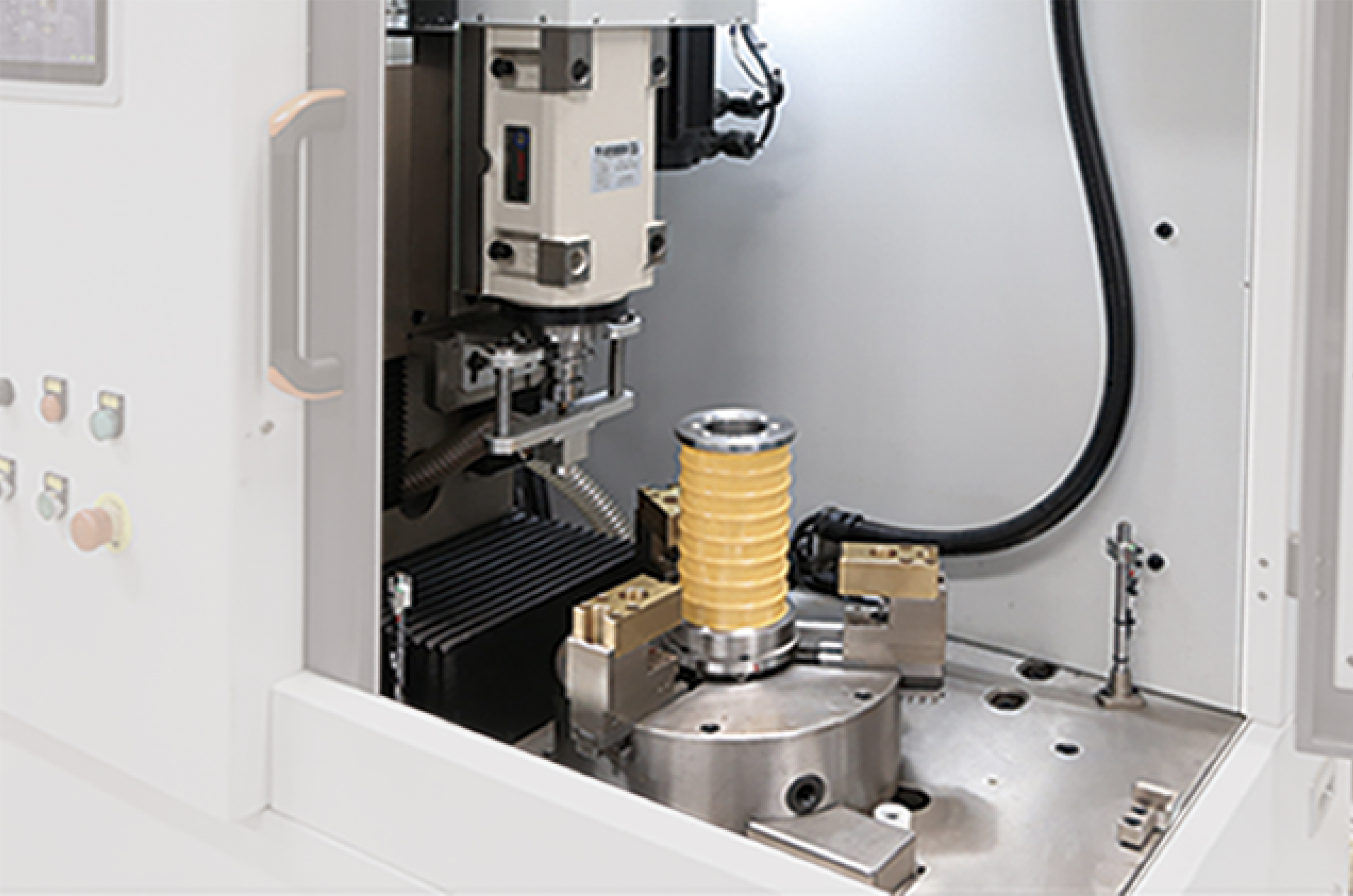
Acceptance testing should be run on the conductor the line will produce, not on the conductor the machine was first tuned for.
Use cases: matching the conductor mix to the line
Copper-only plants. A single-metal copper plant can specify a tightly tuned line: dies, lubricant and annealer set for one metal, with changeover complexity kept low and the take-up specified for copper's stiffness. The risk here is not mis-transfer but over-specification — paying for dual-metal flexibility the plant will not use.
Aluminium-only plants. The reverse applies. Dies, lubricant chemistry, filtration, tension band and take-up are all set for the softer metal, and the acceptance test should be written on aluminium from the start. Aluminium-specific risks — pick-up, oxide, spool compression — should appear in the maintenance routine, not only in the commissioning report.
Mixed plants. This is where the comparison stops being academic. A mixed plant needs a documented changeover procedure, an honest assessment of whether one lubricant can serve both metals, and clarity on which parts are exchanged between campaigns. It also needs to decide whether breakdown is shared or dedicated: HONTA supplies both copper and aluminium RBD lines, so the choice between one dual-purpose breakdown route and two dedicated ones is a configuration decision the buyer can make explicitly rather than inherit.
Line-level choices: RBD plus multiwire, and drive architecture
Two configuration choices sit above the process details and should be settled before the process questions are answered in detail.
The first is the breakdown arrangement. Because multiwire drawing receives wire from a rod breakdown line, the reduction schedule and the surface condition of the incoming wire are set upstream. A breakdown line configured for copper will not deliver aluminium wire with the same surface and tolerance without review, so the RBD specification belongs in the same conversation as the multiwire specification.
The second is drive architecture. Individual-motor machines offer per-shaft setting and faster die changeover with lower noise, at higher initial electronics cost, while common-shaft machines tie the shafts mechanically. For a plant that expects frequent size changes or a mixed conductor programme, the flexibility has a process value that goes beyond energy. The energy estimate noted earlier — up to 25% savings for individual-motor systems — should be treated as a claim to verify against a plant's own load profile.
FAQ
Can a multiwire drawing line configured for copper be converted to run aluminium?
Often the frame, drives and spoolers can be retained, but the process side cannot. Dies, lubricant chemistry and filtration, tension and slip settings, annealer settings and take-up tension are all conductor-specific, and each has to be re-derived for the aluminium being drawn. Conversion should therefore be assessed by the line builder against the target wire range and surface requirement, with the changed items listed and the acceptance test re-run on aluminium before production release.
Which process area changes most between copper and aluminium?
Surface condition and lubrication change most, and they change together. Aluminium's oxide film is hard, abrasive and quick to re-form, and the metal picks up on die bearings and capstan surfaces more readily than copper. That combination forces a review of lubricant additives, filtration and contact-surface finish at the same time, whereas a copper line can often run with a more forgiving balance between the three. Tension control follows closely, because the narrower tension band amplifies any instability the lubrication change introduces.
Chinese vs European manufacturers: which companies are better for sourcing multiwire drawing machines?
There is no evidence-based blanket answer, and country of origin is not itself a performance metric. The decision should rest on documented criteria applied identically to every candidate: whether the supplier builds for both copper and aluminium, the proposed line configuration for your wire range, certification and standards compliance, changeover and commissioning support, spare-parts commitments, and references at your wire sizes. As one reference point, HONTA is a Chinese manufacturer founded in 2006 with a 30,000 m² facility, 157 employees, an annual output of about 200 sets and a 45% export ratio, and it established a second production base in the United States (HONTA INC) in 2017; it holds ISO 9001 and ISO 14001 certification and complies with IEC 60204-1 safety requirements, as recorded in a 2026 report by The National Law Review. European suppliers should be assessed against the same checklist and asked for the same evidence set, so that the comparison is made on documents rather than on reputation.
Do we need a separate rod breakdown line for aluminium?
Not necessarily, but the question should be answered explicitly rather than by default. A shared breakdown route means the reduction schedule, surface condition and lubricant management have to work for both metals, with campaign changeover in between. Dedicated copper and aluminium breakdown lines remove that compromise at the cost of capital and floor space. The deciding factors are the share of each metal in total output, how often the line changes over, and how tight the surface requirement is on the aluminium side.
What should be agreed before accepting an aluminium drawing line?
Agree the acceptance test before the order, not after commissioning. That means a defined wire size range, surface and elongation criteria, an acceptable break rate over a defined trial run, spool quality standards, and the documented settings the supplier will hand over alongside operator training. It also means a spare-parts list that covers the wear items created by aluminium duty. HONTA publishes its drawing machine catalogue, including the copper and aluminium RBD and multiwire drawing ranges, which is a practical starting point for building that specification; the technical team can be reached through the contact details on the company website to discuss a specific conductor mix.
Conclusion
Copper and aluminium multiwire drawing share a machine architecture but not a process specification. Die selection, lubrication and cooling, tension control, surface handling and downstream processing each shift when the conductor changes, because aluminium's lower flow stress, harder oxide film and different heat behaviour move the friction and tension window the line is tuned around. The decision-stage lesson is simple: treat a copper-tuned configuration as a baseline to be re-derived, not a specification to be copied, and write the acceptance test on the conductor the line will actually run.
For buyers weighing a line-level configuration across both metals, HONTA's copper and aluminium RBD lines and multiwire drawing line series provide a single reference point for the breakdown and drawing stages together. The drawing machine catalogue sets out the available ranges, and the team can be contacted directly at tammy@jshonta.com or +86 182 6287 9467 to compare requirements for a specific conductor programme.
Have Questions or Need More Details?
Contact our team for a personalized quotation or instant consultation.
Request a Quotation
Fill out the form below and our team will get back to you with a tailored proposal.
WhatsApp Direct Chat
Prefer to chat in real-time? Message us on WhatsApp for instant assistance & quick answers.
- Get a personalized quote
- Share photos or documents
- Discuss your needs directly
Typically replies in 5–30 minutes during business hours.