
Choosing Capstan and Die Materials for Multiwire Drawing
On a multiwire drawing machine, capstan and die materials decide three things that appear in production data long before they appear in a purchase order: wire surface condition, the interval between tooling changes, and how long the quoted pass schedule stays accurate. The selection rule is not to buy the hardest material on offer. It is to pair a die that holds its bore geometry with a capstan surface that holds its friction coefficient for the same conductor, speed band and finish requirement, and to write that pairing into the machine specification before the order is placed.
This guide is written at the level of principle. Machine builders and die suppliers grade their materials differently, and a grade name alone does not define wear behaviour. What follows is the decision logic, the trade-offs behind each option, and the questions that turn a verbal promise about tooling into a specification clause.
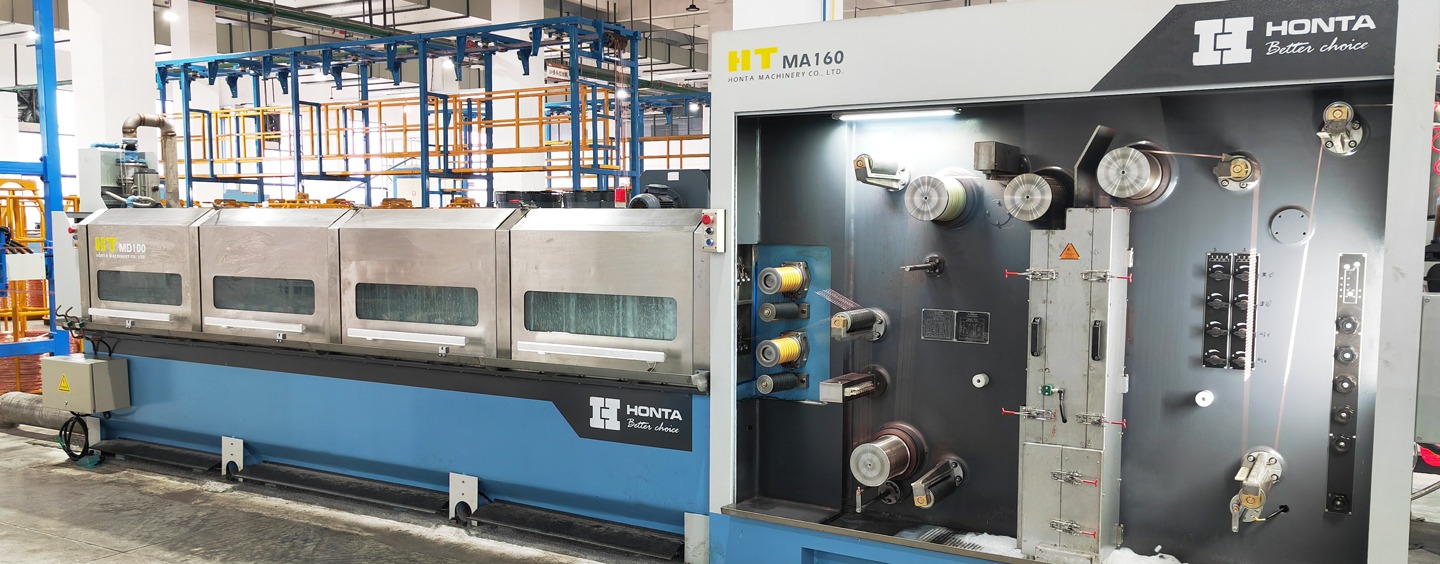
Why tooling is the last specification written and the first one blamed
A multiwire machine is normally bought on visible parameters: wire count (8, 16, 24 or 32 wires), maximum speed, drive architecture, whether an inline annealer machine is included, and the take-up format such as a single spooler, double spooler or basket coiler. Capstan surface specification and die grade are often left to a separate die purchase after commissioning, on the assumption that tooling is a consumable and consumables are interchangeable.
That assumption breaks in two places. First, the pass schedule quoted with the machine assumes a die geometry and a friction behaviour; a later substitution changes both. Second, capstan wear is slow and silent. The drum does not fail outright. It gradually polishes, grooves or loses coating, and the tension balance across all 8, 16, 24 or 32 wires drifts with it. Operators compensate by trimming speeds and tensions, which hides the wear and shortens die life elsewhere in the line.
Where capstans and dies sit in a conductor line
Multiwire drawing is a finishing stage, not a starting one. Rod first passes a copper rod breakdown machine or an aluminium rod breakdown machine, often a rod breakdown with annealer machine for copper and aluminium or a rod breakdown machine with individual motors, and enters the multiwire machine at an intermediate diameter. Downstream of the multiwire drawing machine sit annealing (an inline annealer machine where fitted), spooling on a wire take up machine, and bunching or stranding.
That position inside wire and cable machinery determines the tolerance for tooling error. A rod breakdown machine can absorb a degree of surface damage because the wire will be drawn again. A multiwire machine frequently produces the final diameter, so a scratch introduced at the last capstan reaches the customer. This is why capstan and die selection belongs to the same evaluation as the machine itself, and why wire and cable machine manufacturers who publish their tooling specifications shorten the buyer's comparison.
HONTA is one such builder. Jiangsu HONTA Machinery., Ltd. was founded in September 2006, operates a 30,000 m² factory with 157 employees and a 30-engineer R&D team, and reports an annual output of 200 sets across rod breakdown machines, multiwire drawing machines, high-speed double twist bunching machines and wire electrolytic plating lines, with 45% of output exported. For scale context on speed class, HONTA's published specification for its 24-wire multiwire drawing line HT.MD100.03.27.24 lists a maximum mechanical speed of 1,800 m/min.
What the die does and what the capstan does
The die performs the reduction; the capstan provides the pull and, on accumulating machines, stores the wire between passes. Each die and its preceding capstan form one pass, so a 24-wire machine carries 24 parallel copies of the same pass schedule.
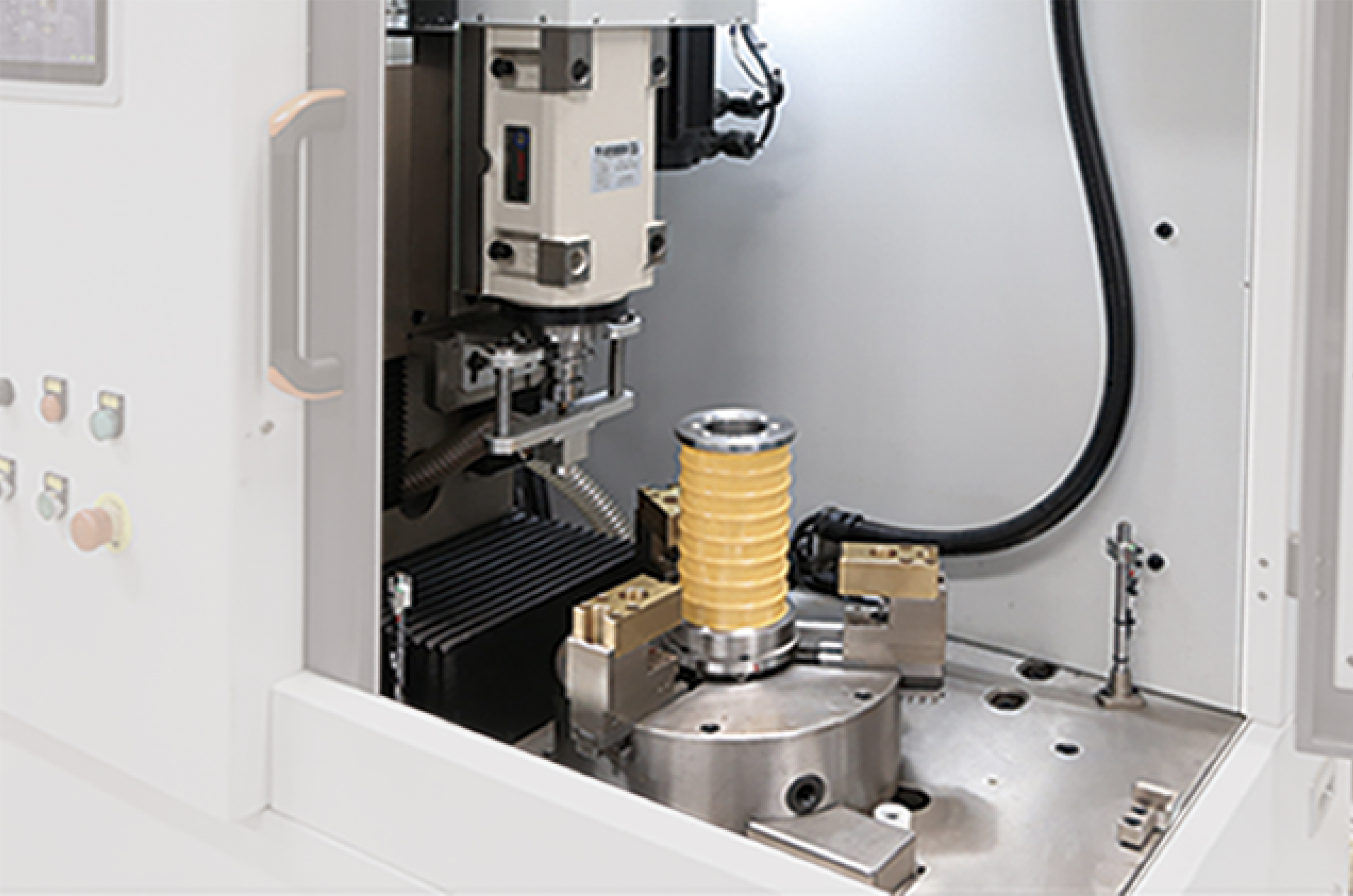
The die has two functional zones that matter for material selection. The approach cone guides wire and lubricant into the reduction; the bearing controls the final diameter and most of the surface finish. Die material therefore addresses two different failure modes: loss of bore geometry, which shows up as diameter drift, and loss of bearing polish, which shows up as scratching, slivers or pick-up.
The capstan has one functional surface and two failure modes. In a slip-type machine the wire slides on the drum by design, so the capstan is a friction element inside the tension equation, and grooving or polishing changes slip and therefore changes tension for every downstream pass. In a non-slip machine, where capstans are driven so that wire speed and drum speed match, the drum is mainly a wear and marking surface. Drive architecture shifts this balance too: compared with a common-shaft gear drive arrangement, individual motor drive is reported to allow faster die changeover and lower noise, at a higher initial electronics cost. Faster die changeover only helps if the replacement die set is specified correctly.
Die material selection: three families and what separates them
Almost every drawing die in a cable plant falls into one of three families. Within each family, suppliers offer several grades, and the grade rather than the family name determines wear life.
| Die family | Where it is normally used | Strengths | Limits to plan around |
|---|---|---|---|
| Tungsten carbide | Coarser intermediate sizes and heavier per-pass reductions; general-purpose work | Tough under load, tolerant of minor misalignment, can be reworked and repolished | Bore wear is progressive and easy to miss; diameter drift appears before surface failure |
| Polycrystalline diamond (PCD) | Medium to fine wire in continuous high-volume production | High wear resistance with good bearing polish; long intervals between changes when cooling and lubrication are stable | Less forgiving of shock loads and misalignment; needs controlled repolishing rather than simple replacement |
| Single-crystal diamond | Very fine wire and finish-critical work | Highest achievable bearing polish, which supports defect-sensitive downstream processes | Fragile relative to carbide and PCD; inclusions, poor lubrication or an alignment error can damage the bearing quickly |
Two rules cut across this table. First, die geometry travels with die material: approach angle and bearing length decide whether a wear-resistant material delivers a better surface or merely wears more slowly in the wrong shape. Second, a harder material is not automatically the cheaper choice per ton of wire, because repolishing, replacement and the downtime to change a full 24-wire die set all belong in the comparison.
Principle: specify die family and geometry together, per pass. A die grade quoted without its approach angle and bearing length is not a specification.
Capstan surface selection: four options and what each trades
Capstan surfaces are described in three layers: base material, hardening method and top surface treatment. Buyers often hear only the third. Ask for all three.
| Capstan surface | Behaviour in service | Best fit | Watch point |
|---|---|---|---|
| Hardened alloy steel | Predictable baseline friction; grooves over time where slip is present | Lower-speed lines, larger wire, cost-sensitive builds | Reconditioning by grinding changes diameter and surface finish; record it |
| Hard-chrome plated steel | Lower friction and better abrasion resistance than plain hardened steel | Mixed conductor programmes where marking must be limited | Plating integrity is the failure mode; flaking or local wear changes friction abruptly |
| Ceramic-coated | High wear resistance with good release behaviour against soft conductors | Aluminium and soft-alloy drawing where pick-up is a risk | Coating damage does not repair itself; confirm whether the drum can be re-coated or must be replaced |
| Tungsten carbide ring or sleeve | Highest wear resistance among common options, with stable dimensions | High-speed, high-wire-count machines where tooling stops are expensive | Higher cost and mass; the finish of the carbide surface still has to be controlled |
The pairing question is not which capstan is best in isolation, but which capstan keeps its friction coefficient for the conductor being run. On a slip-type machine, a surface that polishes in service changes slip, and a change in slip redistributes tension across the pass schedule. On a non-slip machine the same surface change mostly affects marking and wire cleanliness. Two plants running the same machine model can therefore need different capstan specifications.

Selection logic by conductor type
Copper and aluminium do not wear tooling in the same way, so one die and capstan combination will not produce the same maintenance pattern on both.
- Copper. Copper work-hardens as it is drawn, so die pressure and heat rise along the pass schedule. Surface oxide acts as an abrasive on the die bearing, and drawn copper is prone to marking if the capstan surface is grooved. For bare copper feeding an enamel or plating process, bearing polish matters more than raw wear resistance.
- Aluminium and aluminium alloys. Softer wire transfers material onto both the die bearing and the capstan surface. This adhesive pick-up is the dominant surface defect mechanism, and it is a release problem rather than a hardness problem, which is why a ceramic-coated or well-polished capstan often contributes more than a harder die.
- Hard-drawn and alloy conductors. Higher flow stress means higher die pressure and more heat per pass. A wear-resistant die helps, but adequate lubricant delivery to the die becomes the limiting factor before material grade does.
Practical consequence: a plant running copper and aluminium on the same multiwire machine should expect two tooling strategies rather than one, and should say so when the machine is specified.
Selection logic by drawing speed band
Speed changes what the constraint is. At low and medium speeds, tooling life is dominated by abrasion, and the main risk is an undetected diameter drift. At high speed, heat generation at the die and on the capstan surface dominates, so lubricant film thickness, cooling and the thermal stability of the die material become the limiting variables.
A machine in the 1,800 m/min maximum-speed class is a reminder of two distinctions. Maximum mechanical speed is not the same as sustainable production speed with a given conductor and tooling set, and the tooling specification that works at commissioning speeds may not be the one that holds surface quality at the top of the range. Ask the builder for the recommended continuous speed with the specified die family and capstan surface, for your conductor, not the catalogue maximum.
Selection logic by finish requirement
Finish requirement should be written as an acceptance criterion, not as an adjective. A phrase such as good surface cannot be quoted against; a diameter tolerance per wire plus a described defect limit can.
Where the drawn wire feeds an enamel line, a plating line or fine bunching, defect tolerance is low and the cost of a surface failure is high, so the specification should push toward fine bearing polish, dedicated die sets per pass and a capstan surface with no grooving history. Where the wire goes directly to stranding for building cable, surface tolerance is wider and diameter consistency across all 8, 16, 24 or 32 wires matters more than finish, which shifts attention to wear life and friction stability instead of polish.
How the material pairing changes the pass schedule
The pass schedule is the reduction sequence: how many passes, how much reduction per pass, and which capstan speed ratios and tension targets support it. Capstan and die materials do not change the arithmetic, but they change whether the arithmetic still describes the machine after six months of running.
- Die bore stability protects the schedule. A die material that holds its bore keeps actual reduction equal to design reduction. A die that wears open silently reduces the load on that pass and overloads the next one.
- Capstan friction stability protects the tension balance. In slip machines, a change in drum friction changes slip and therefore tension, so the schedule validated at commissioning is no longer the schedule being run.
- Geometry and material are one decision. A wear-resistant die with the wrong bearing length will hold its shape and still deliver a poor surface, which is the worst combination because the defect persists for the whole wear interval.
- Protective scheduling has a cost. Reducing per-pass reduction to protect tooling adds passes, which adds capstans, dies and maintenance points on every one of 24 wires. It is a legitimate trade, but it should be an explicit one.
On an individual motors multiwire drawing machine, each capstan is driven separately, so the schedule can be trimmed per wire and per pass. On a common-shaft machine, mechanical ratios fix the relationship between capstans and friction behaviour becomes a stronger variable in the result. The same tooling pair therefore behaves differently on the two architectures.
Setting maintenance frequency from measurement, not from material claims
No die or capstan material sets a maintenance interval on its own. The interval is set by conductor, speed, per-pass reduction, lubricant condition and filtration, alignment and the material pair, and it should be established from your own measurements rather than from a supplier statement.
Three checks cover most of the risk:
- Die bore diameter, per pass. Measure on a fixed schedule and compare against the pass schedule target. Diameter drift is the earliest visible sign of wear and the easiest to correct before it reaches the wire surface.
- Bearing surface condition. Inspect for pick-up, scoring and polish loss, particularly on aluminium duty where adhesive transfer appears before any dimensional change.
- Capstan surface condition. Record grooving, coating loss and marking against wire count and pass position. A single marked capstan can affect one wire out of 24 and be missed by end-of-line inspection.
Keep spare die sets per pass and per size, and spare capstan rings or sleeves where the design allows replacement without shaft removal. HONTA's ODM scope includes customization of colour and model type of components and parts, which is the point at which alternative capstan surfaces and die configurations can be written into the order instead of being negotiated after commissioning.
What a three-year reference run does and does not prove
HONTA's reference record includes two machines supplied to a wire and cable factory operating in the United States, Poland, Portugal, Spain and Turkey, in service for three years and reported to be steadily producing to the customer's requirements, with fast speed and high efficiency cited as the highlights. That supports machine-level reliability and service continuity. It does not on its own prove a wear interval for your conductor, your reduction sequence or your die grade; those still have to be established by measurement on your line.
Questions to put to the machine builder during specification review
These questions convert tooling from a post-purchase topic into a reviewable part of the offer. Ask for written answers and attach them to the purchase specification.
- What is the capstan specification per pass in terms of base material, hardening method, surface treatment and surface finish? A single word such as ceramic is not a specification.
- Is the machine slip-type or non-slip, and how is slip managed for my conductor and wire count?
- Which die family and geometry does the quoted pass schedule assume, including approach angle, bearing length and target bore per pass?
- Does the pass schedule change if I substitute die material, for example from carbide to PCD?
- What continuous speed is recommended with the specified tooling for my conductor, and how does it compare with the maximum mechanical speed?
- How is heat removed at the die and capstan, including lubricant delivery, flow and filtration requirements at the top of the speed range?
- Which parts are defined as wear parts, and what is the change-out procedure and time for a full die set and for one capstan?
- Can capstan rings or sleeves be replaced without removing shafts, and can worn surfaces be re-finished, re-plated or re-coated?
- What acceptance test is performed before shipment, and which wire-surface and diameter data is recorded? HONTA states 100% test as its quality-control mode.
- Which items are covered by the machine's CE marking and which are separately supplied tooling? This matters for EU-bound lines and for the technical file.
- What references exist for comparable conductor and wire count, and can the tooling configuration used there be shared?
- What are the commercial terms for MOQ, lead time, spare parts and after-sales route? HONTA quotes an MOQ of 1 set, a lead time of 90 days against a monthly capacity of 15 sets, and after-sales support by remote and on site.
Frequently asked questions
Which standards does the machine comply with, and does that cover the dies and capstans?
HONTA's wire drawing machines are covered by CE-MD certificate M.2022.206.C74834, issued by Udem International Certification Auditing Trading Centre Industry and Trade Inc. Co. for the EU market, with a scope of wire drawing machine and validity from 20 June 2020 to 20 June 2027. The listed standards are Machinery Directive 2006/42/EC, EN ISO 12100:2010, EN 60204-1:2018 and EN ISO 13849-1:2015. A separate 2026 review of HONTA's compliance position reported ISO 9001 and ISO 14001 certification and compliance with IEC 60204-1. The certificate scope is the machine, so dies and capstans supplied as separate tooling should be confirmed with the builder as part of the same technical file rather than assumed to be included.
Can the capstan and die configuration be customized as part of the order?
Yes, within the builder's stated customization scope. HONTA operates an ODM production mode with customization of colour and model type of components and parts, which covers component selection rather than cosmetic changes alone. Because the pass schedule assumes a specific die geometry and capstan friction behaviour, any change to component type should be reviewed against that schedule before the order is confirmed.
How should tooling cost be compared between two offers?
Compare per pass and per wire, not per piece. The relevant items are how many die sets are needed to cover the full 8, 16, 24 or 32 positions and all scheduled sizes; whether worn dies and capstans can be repolished, reground, re-plated or re-coated instead of replaced; and how much downtime a full set change requires. A cheaper die that cannot be reworked and must be replaced as a set can cost more in service than a higher-priced die that is repolished on a planned schedule.
Can the specified tooling be validated before shipment?
It should be, and the request belongs in the order. HONTA states 100% test as its quality-control mode and an MOQ of 1 set, so a single-machine order can still carry a defined acceptance test. Ask for the wire-surface and diameter records from that test, and ask which die family and capstan surface were installed during it, because an acceptance report that does not name the tooling does not validate the configuration you specified.
What lead time applies, and how should spares be planned?
HONTA quotes a 90-day lead time against a monthly capacity of 15 sets, with after-sales support by remote and on site. Plan spares against the machine rather than against the order: die sets per pass and per size, plus capstan rings or sleeves for the passes with the highest wear. The full drawing machine catalogue is available for download as a PDF at https://cdn.socialarks.com/sbsp/24520/common/2026/0709/Catalogue%20of%20drawing%20machine.pdf, and specification questions can go directly to the HONTA team at tammy@jshonta.com or +86 187 5292 2675.
Conclusion
Capstan and die materials on a multiwire drawing machine are a paired decision, not two separate purchases. The die decides whether the bore and bearing hold the pass schedule; the capstan decides whether friction and surface stay stable across all 8, 16, 24 or 32 wires. Conductor type sets the wear mechanism, speed band sets whether heat or abrasion dominates, and finish requirement sets how early a change-out has to happen. Bring those three inputs to the specification review, ask the twelve questions in writing, and tooling becomes part of the machine evaluation instead of an unplanned cost after commissioning.
For machine-level specifications, component customization and reference records, see Jiangsu HONTA Machinery.
Have Questions or Need More Details?
Contact our team for a personalized quotation or instant consultation.
Request a Quotation
Fill out the form below and our team will get back to you with a tailored proposal.
WhatsApp Direct Chat
Prefer to chat in real-time? Message us on WhatsApp for instant assistance & quick answers.
- Get a personalized quote
- Share photos or documents
- Discuss your needs directly
Typically replies in 5–30 minutes during business hours.