
Adding a Second Multiwire Drawing Line: An Application Guide
for Expanding Plants
A second multiwire drawing machine is worth adding when the first line is at its practical limit for the wire sizes you actually sell, and when the extra capacity can be powered, spaced and installed without interrupting current shipments. That makes expansion a four-part sequence rather than a single purchasing event: audit the first line, decide whether to duplicate or reconfigure it, fix the utility and floor space envelope, then phase the installation so output keeps moving.
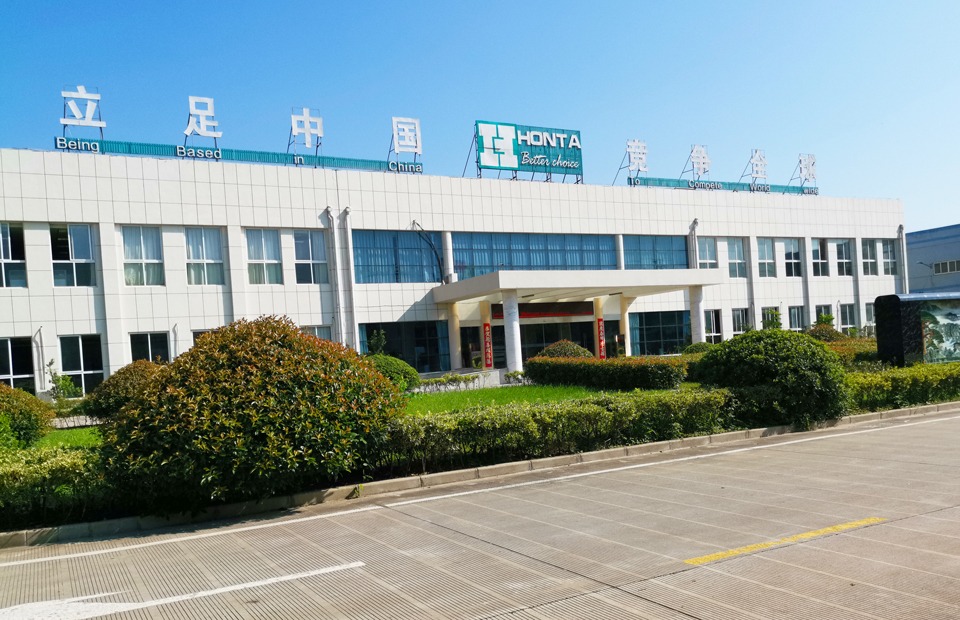
This guide is written for plant managers, project engineers and owners in wire and cable factories that already run one line and are preparing a second. It uses production data from HONTA (Jiangsu HONTA Machinery., Ltd., founded 2006, 30,000 m² factory, 157 employees, 200 sets annual output) to show how build slots and lead times are planned with a supplier, and it closes with a pre-expansion checklist that collects the items usually discovered too late.
What “adding a second line” actually means
A second multiwire drawing line is not automatically a copy of the first one. Expanding plants normally choose between three forms:
- Identical duplicate — the same model and configuration as the existing machine, added for throughput and redundancy.
- Reconfigured variant — a machine with a different wire count, a different inlet and outlet envelope, or a different take-up arrangement, aimed at a product family the first line handles poorly.
- Split-capacity arrangement — two lines of similar size, each dedicated to a narrower band of wire sizes, so die changes and scheduling stay simple.
All three add capacity. They differ in what they demand from engineering, spares, operator training and floor space. The right choice depends on which constraint actually limits the plant: tonnage, wire-size flexibility, energy cost per ton or delivery reliability.
Why expanding plants add a second line
Capacity expansion in a conductor plant usually follows one of four conditions: an order book that exceeds what one line can sustain, a product mix too wide for a single die and spool set, a redundancy requirement because one line has become a single point of failure, or an energy review that makes a newer drive architecture attractive.
Export exposure adds a further reason. Plants serving several markets at once often need scheduling freedom that a single line cannot give, because wire sizes, spool formats and delivery windows differ by customer. HONTA’s own export mix reflects that pattern: about 45% of its output goes to markets including the USA, the Middle East, Africa and Asia, and the company has operated a second production base in the United States, HONTA INC, since 2017.
External research supports the general direction without deciding any individual case. A commercially published study by Dataintelo sizes the global wire drawing machine market at USD 3.8 billion in 2025 and projects USD 6.1 billion by 2034. That is a market-level estimate from a commercial research publisher, not evidence that a particular factory needs more capacity; the audit below is what settles the question for a specific plant.
Step 1 — Audit the first line before you copy it
The audit answers one question: where does the existing line lose output? Duplicating a line that is limited by its take-up, its annealer or its die-change routine simply duplicates the limitation at twice the capital cost.
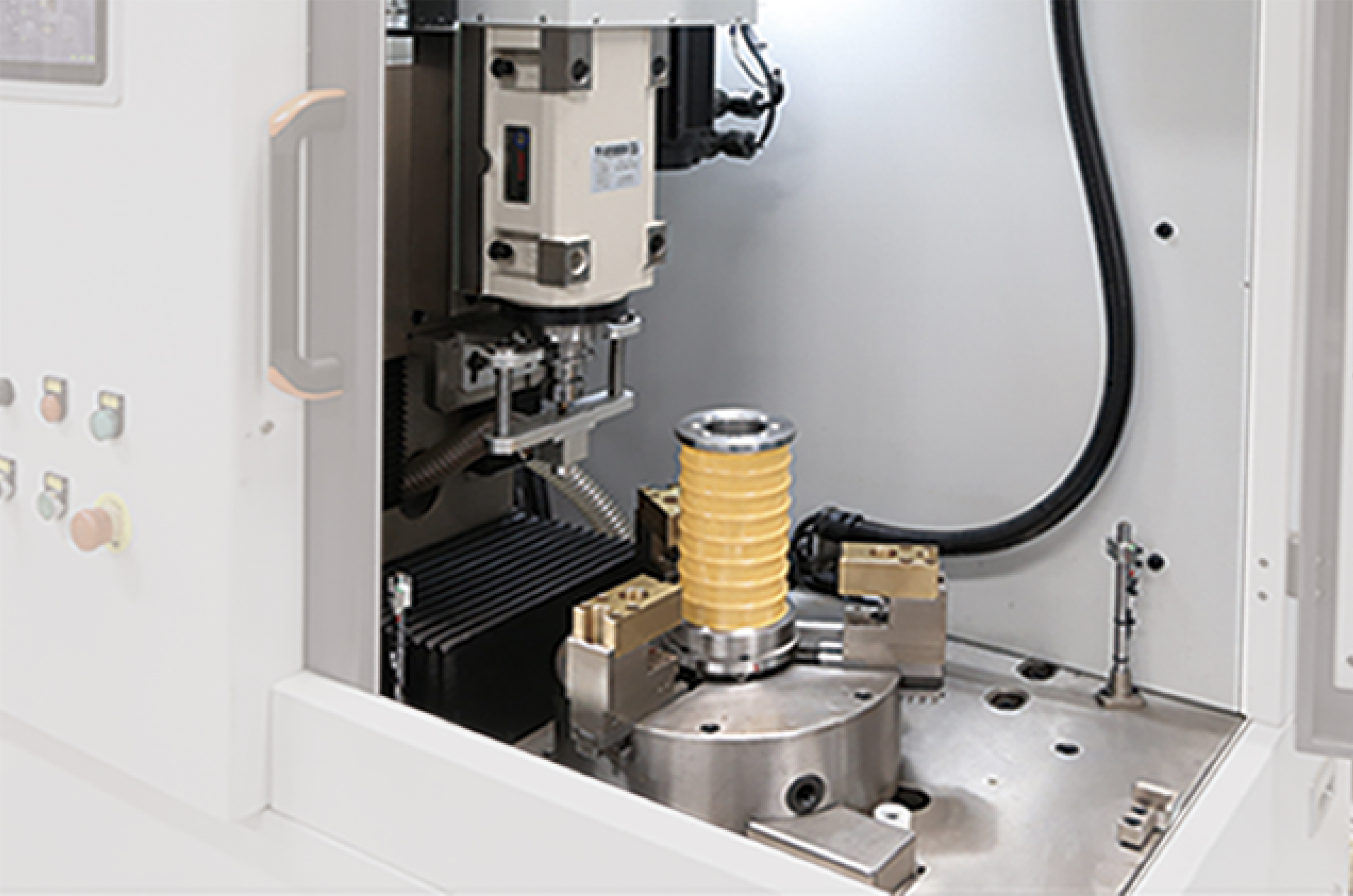
Throughput baseline. Record sustained running speed over a normal shift rather than the fastest observed minute, then log the reasons the line stops: wire breaks, die changes, spool changes, quality holds and changeovers. Nameplate figures are a starting point, not a measurement. A 24-wire model in HONTA’s published range (HT.MD100.03.27.24) is listed at a maximum mechanical speed of 1,800 m/min, and that ceiling says nothing about the speed a mixed product schedule and spool handling actually sustain.
Product envelope. Compare the sizes you sold in the last twelve months against what the machine was specified for. A 16-wire machine in the HT.MD100B.16.22D.01 configuration has a published envelope of 1.8–2.0 mm inlet and 0.18–0.5 mm outlet, with Siemens motor and Siemens PLC. If most of the order book sits in a narrow part of that band, a duplicate sized to the same envelope is a reasonable default; if the book has drifted outside it, the envelope is the argument for reconfiguration.
Downstream equipment. The drawing cabinet is rarely the whole line. Supporting devices listed for this application include annealing furnaces, pay-off and take-up units, winding and unwinding machines, annealers and single or double-disc take-up machines. A wire take up machine, single spooler, double spooler or basket coiler that cannot keep pace caps the line regardless of drawing speed, and an inline annealer machine running at its limit has the same effect. Note which of these is the real bottleneck before you order another drawing section.
Quality and release time. Collect rejection data by wire size and the time between drawing and quality release. Where 100% test is the operating standard, the inspection workload grows with the second line, and that is a staffing question as much as an equipment one.
Step 2 — Duplicate or reconfigure?
Duplicate when the constraint is tonnage. If the audit shows the first line is fully loaded inside a stable product envelope, an identical machine is the shortest path to more output. Operator routines carry over, one die schedule serves both lines, one spare-parts list covers the pair, and the technical annex to the enquiry is a copy of the existing specification rather than a new design brief.
Reconfigure when the constraint is fit. If the order book has moved toward sizes or spool formats the first line handles inefficiently, repeating the same configuration locks the problem in for another equipment cycle. Reconfiguration can mean a different wire count, a different take-up arrangement, or a different drive architecture.
Drive architecture deserves its own review. A 2026 technical comparison published by HTNXT estimates that individual-motor multiwire machines can reduce energy consumption by up to 25% compared with common-shaft (gear-drive) systems, and notes faster die changeover and lower noise alongside higher initial electronics cost. That figure is an estimate for the architecture, not a guarantee for your plant, so it should be tested against your own load profile, running hours and electricity tariff before it is used to justify the higher purchase price.
Wire count works the other way. A higher-count machine concentrates more output into the same floor area, which matters in a brownfield building where space, not capital, is the binding constraint. The trade-off is a narrower outlet range, heavier spool and die logistics, and a longer learning curve for the crew.

| Decision criterion | Duplicate the existing design | Reconfigure the second line |
|---|---|---|
| Product mix fit | Keeps the current inlet and outlet envelope, so the existing schedule transfers directly | Allows a narrower or wider outlet band if the order book has shifted |
| Spares and dies | One die series, one spare-parts list, one PLC program to maintain | Adds a second die series and a second spares inventory |
| Operating learning curve | Crew and maintenance follow routines already in place | Requires retraining on new control logic and set-points |
| Energy and drive architecture | Energy cost per ton stays on the current curve | An individual-motor design may lower energy use (estimated up to 25% versus common shaft) at higher electronics cost |
| Engineering and approval effort | Lower: repeat drawings and a repeat utility schedule | Higher: new layout, new utility loads, new documentation |
| Floor space and utilities | Predictable from the existing installation | Must be re-measured from a new layout drawing |
Write the answer on one page: product envelope, wire count, drive architecture, take-up format and the reason each departs from the first line. That page becomes the technical annex to the enquiry, and it is what allows a supplier to quote a comparable scope instead of a generic machine.
Step 3 — Fix the utilities and floor space envelope
Utilities and floor space delay more second-line projects than price does, because they are usually estimated from the first installation rather than measured for the new machine. The supplier’s utility schedule, not the neighbouring line’s drawings, is the source of truth.
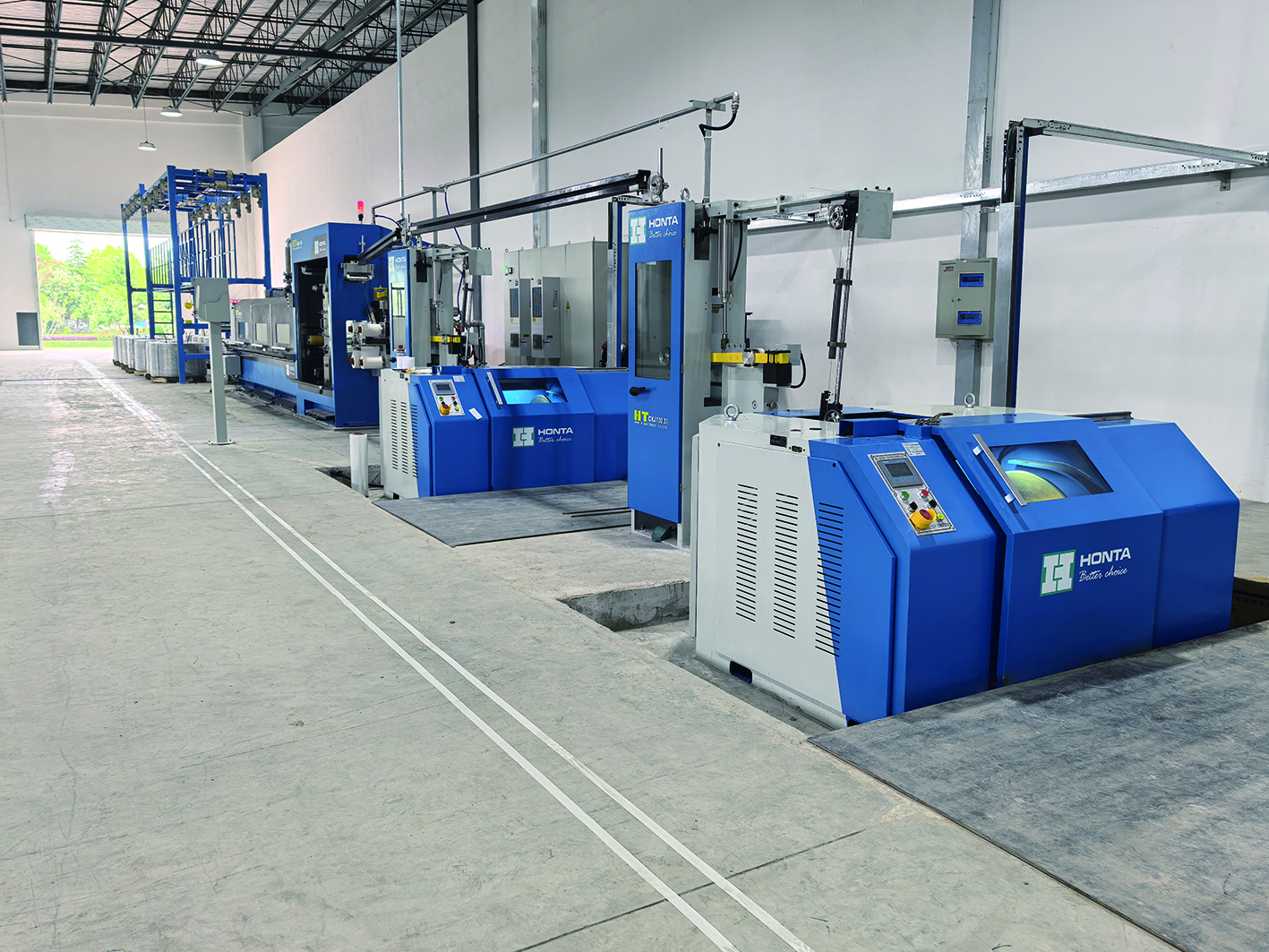
Request a utility schedule covering: connected electrical load and supply voltage, control voltage, compressed air volume and pressure, cooling water flow and temperature, emulsion or coolant volume, exhaust requirements, foundation loading, and the ambient temperature range the machine is rated for. Ask for the figures in writing for the exact configuration quoted, since a different wire count or an added annealer changes them.
Electrical and control. The 16-wire HT.MD100B.16.22D.01 uses Siemens motor and Siemens PLC. Plan for cabinet space, a parameter back-up routine and a spare-parts decision on control hardware at the same time as the machine order, because those choices are easier to make before the slot is locked than after commissioning.
Floor space. The machine footprint is only the first item. Add the annealer if the line includes an inline annealer machine, the take-up or spooler position, the coil and spool storage area, crane and forklift aisles, maintenance clearance on the die and capstan side, the electrical room, and a die and tooling bench. In a brownfield building, the aisle width needed to move a full spool usually decides the layout before the machine dimensions do.
Safety documentation. HONTA holds ISO 9001 and ISO 14001 certification and complies with IEC 60204-1 for electrical safety of machinery. The second line should ship with documentation that matches the standard applied on site, and the project team should confirm the acceptance package in the purchase order rather than at handover.
Step 4 — Phase the installation without halting output
The working rule for a brownfield expansion is that the second line is built around the first one, not beside it in isolation. Every task that touches shared services is scheduled into a window where the existing line can afford to stop.
- Civil and foundation work first, while the first line keeps running. Foundations, floor openings, trenches and cable routes are the tasks most likely to run late, and they do not need the new machine on site.
- Long-lead utility upgrades second. Transformer capacity, compressed air capacity and cooling water circuits are ordered against the schedules from Step 3, not against the machine delivery date.
- Machine placement and alignment. Position, level and align the drawing section and its take-up, then verify line heights and spool paths against the layout drawing.
- Dry run and utility tie-in in a single planned shutdown window, with the first line’s spool and die stock topped up beforehand so the shutdown is measured in hours rather than days.
- Wire trial and acceptance against the agreed outlet range, spool format and quality criteria, with the quality team signing off on test records rather than on visual inspection alone.
- Ramp-up, running the new line at a reduced mix until the crew’s break and die-change performance matches the first line.
Protect the buffer. Before the shutdown window, build finished-goods and work-in-progress buffers sized to your largest customer’s delivery cycle, extend the spool pool so both lines can run without spool starvation, and duplicate the die stock for the sizes that will run on both machines. A second line that starts up with an empty spool pool creates the shortage it was meant to remove.
Agree the support plan early. HONTA provides after-sales support both remotely and on site. Whichever mix you intend to use during ramp-up should be written into the project plan, together with the contact route and the response expectation during the first weeks of production.
Step 5 — Plan the lead time and the build slot
A second line is not an off-the-shelf purchase with a fixed delivery date; it occupies a build slot on the supplier’s assembly plan. HONTA’s stated figures give the arithmetic a buyer needs: an annual output of 200 sets, a monthly capacity of 15 sets, a standard lead time of 90 days and a minimum order quantity of one set.
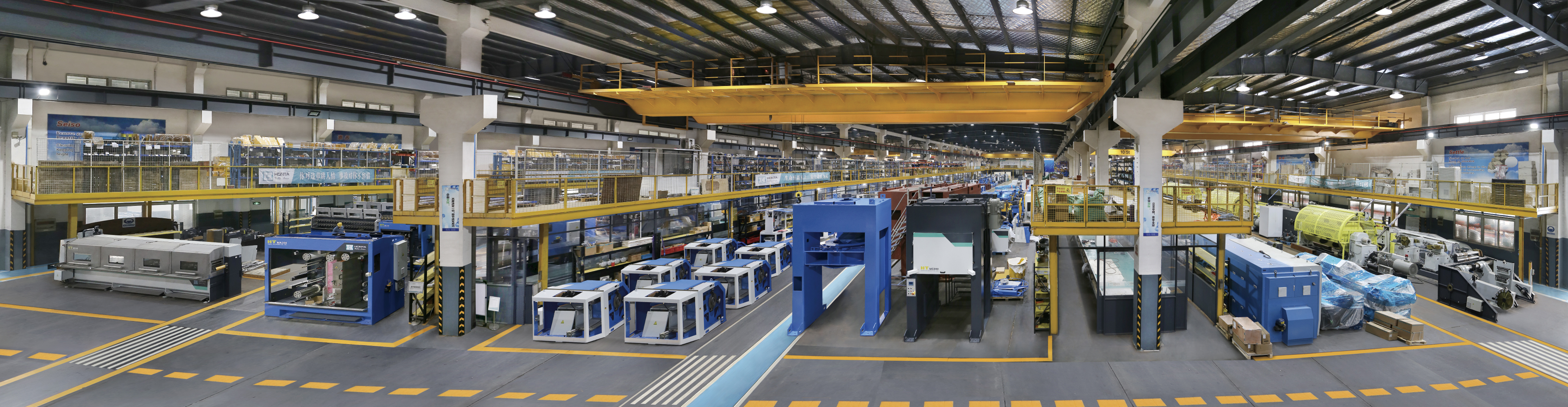
Book backwards, not forwards. Start from the date the plant needs salable wire and subtract commissioning, installation, shipping and the 90-day lead time. If that backward calculation lands in a period when the supplier’s monthly capacity is already committed, the choice is to move the project start earlier or accept a later start-up — and both decisions are cheaper before civil works begin than after.
Lock the configuration before the slot. HONTA operates an ODM model with customization of colour and of the model type of components and parts. Any non-standard item should be settled before the slot is confirmed, because a changed specification inside a 90-day window is exactly the kind of variation that pushes a delivery date.
Match the supplier’s geography to yours. HONTA’s export markets include the EU, the Middle East and Africa, with roughly 45% of output exported and a United States production base operating since 2017. For a plant in one of those regions, ask specifically which documents, spare-parts arrangements and service routes apply to your destination; the answer affects the commissioning schedule as much as the shipping schedule.
Keep the enquiry comparable. A quote should state wire count, inlet and outlet range, drive architecture, take-up format, utility figures, documentation package, lead time and slot date. Where a supplier’s range also covers a copper rod breakdown machine, an aluminium rod breakdown machine or a rod breakdown line with annealer, clarify whether those upstream units are part of this project or remain unchanged — scoping them out on paper prevents scope creep later.
Use cases: three expansion situations
A documented supply case. HONTA’s case record for wire and cable factories in the USA, Poland, Portugal, Spain and Turkey covers two sets delivered for wire drawing, in service for three years, with the result stated as steady production meeting the customer’s requirements and fast speed listed as the highlight. The useful part for a buyer planning expansion is the pattern rather than the wording: two machines placed in a running plant, then held to the same quality requirement over consecutive years.
Scenario A — tonnage-limited plant (conditional example). If the audit shows the first line at its practical ceiling inside a stable size range, an identical duplicate keeps the die schedule, spares list and operator routines unchanged. The project risk then sits almost entirely in utilities, floor space and the shutdown window.
Scenario B — mix-limited plant (conditional example). If a growing share of orders falls at one edge of the current outlet range, a reconfigured second line dedicated to that band can relieve the first machine without duplicating its constraints. The trade-off is a second die series and a more complex production plan.
Scenario C — space-limited plant (conditional example). If the building has no room for another line of the current footprint, a higher-count machine concentrates output into the available area, at the cost of narrower outlet flexibility and heavier spool logistics. This case is decided by the building survey, not by the machine brochure.
Pre-expansion checklist
Use this list before the enquiry goes out. Each item should produce a document, a measurement or a decision, not a verbal answer.
- Product and process: twelve months of order data by wire size; spool and package formats; current outlet range versus required range.
- Line audit: sustained speed per shift; stop-time log by cause; wire-break rate; die consumption; quality rejection by size; release time under 100% test.
- Downstream check: capacity of annealer, wire take up machine, single spooler, double spooler and basket coiler; whether each can absorb the added tonnage.
- Equipment decision: duplicate, reconfigure or split capacity, written on one page with reasons; wire count and drive architecture chosen; customization items listed.
- Utilities: connected load and voltage; control voltage; compressed air; cooling water; emulsion; exhaust; foundation loading; ambient range — all confirmed for the exact configuration.
- Floor space: machine and annealer footprint; take-up and spool storage; crane and forklift aisles; maintenance clearance; electrical room; die bench.
- Installation phasing: civil works schedule; utility upgrade lead time; planned shutdown window; buffer stock and spool pool; acceptance criteria and test records.
- Commercial and documentation: lead time and slot date confirmed in writing; documentation package per IEC 60204-1 and the applicable quality certificates; spare-parts list; after-sales route, remote and on site.
FAQ
What compliance documentation should a second line ship with?
Ask for the documentation that matches the standard applied at your site. HONTA holds ISO 9001 and ISO 14001 certification and complies with IEC 60204-1 for electrical safety of machinery, and its quality control is stated as 100% test. The purchase order should name the documentation package, the test records and the language required, so that acceptance is a document check rather than a discussion at handover.
Can the second line be specified differently from the first?
Yes. HONTA operates an ODM model with customization of colour and of the model type of components and parts, so a second machine does not have to repeat the first configuration exactly. Changes worth deciding early are wire count, inlet and outlet envelope, drive architecture and take-up format, because each of them changes the utility schedule and the floor layout.
What drives the cost difference between duplicating and reconfiguring?
The visible difference is the machine price, but the larger spread usually sits around it: whether existing take-up and spooling equipment can be reused, how much civil work and utility capacity the new layout requires, the size of the second die and spares inventory, and the engineering effort needed for a new specification. Comparing two quotes on machine price alone hides these items; compare them on the full scope list instead.
How can the second line be validated before full acceptance?
Build validation into the purchase order: stated outlet range, spool format, quality criteria and the test records supplied before shipment under the stated 100% test practice, followed by an on-site wire trial against those criteria. HONTA provides after-sales support remotely and on site, so the ramp-up arrangement and the contact route should be agreed before the first wire runs.
How long does a second line take, and how is the build slot planned?
HONTA states a standard lead time of 90 days, an annual output of 200 sets, a monthly capacity of 15 sets and a minimum order quantity of one set. Plan backwards from the date you need salable wire, lock the configuration before the slot is confirmed, and align delivery with civil and utility readiness rather than the other way round. To check current slot availability for a specific configuration, contact the HONTA international trade department through www.jshonta.com.
Conclusion
A second multiwire drawing line is a project, not a purchase order. The plants that expand cleanly are the ones that measured the first line before copying it, decided between duplication and reconfiguration on evidence rather than habit, obtained a written utility and floor space schedule for the exact configuration, and phased the installation around a planned shutdown instead of an unplanned one.
HONTA, a wire and cable machinery manufacturer founded in 2006 with a 30,000 m² factory, 157 employees and an annual output of 200 sets, states a 90-day lead time and a one-set minimum order — figures that make build-slot planning a calendar exercise rather than a guess. For a plant with a defined product envelope and a measured baseline, that is enough to start the enquiry.
For configuration details across the multiwire drawing range, the drawing machine catalogue is available for download: Catalogue of drawing machine (PDF). For company and contact information, see Jiangsu HONTA Machinery., Ltd.
Have Questions or Need More Details?
Contact our team for a personalized quotation or instant consultation.
Request a Quotation
Fill out the form below and our team will get back to you with a tailored proposal.
WhatsApp Direct Chat
Prefer to chat in real-time? Message us on WhatsApp for instant assistance & quick answers.
- Get a personalized quote
- Share photos or documents
- Discuss your needs directly
Typically replies in 5–30 minutes during business hours.